Health benefits of honey: what science supports for coughs, wounds, blood sugar and babies
Health benefits of honey, checked against AAP, CDC, FDA and Cochrane evidence: coughs, wounds, manuka, calories, added sugar, diabetes and babies under 1.
Honey has a handful of proven health benefits, fewer than its reputation suggests. Solid studies show it modestly soothes coughs in children 1 year and older and in adults, which is why the American Academy of Pediatrics suggests it, and FDA-cleared medical-grade honey dressings help some burns and wounds heal. Beyond that, honey is a sugar: its sugars count as added sugars on the Nutrition Facts label, it raises blood glucose almost as much as table sugar, and it must never be given to babies under 12 months.
What are the real health benefits of honey?
Here is the evidence at a glance. “Strength of evidence” reflects how solid the studies are, not how large the effect is.
| Use | What studies show | Strength of evidence | Bottom line |
|---|---|---|---|
| Cough in children 1 and older | Slightly less frequent, less severe nighttime cough than placebo | Moderate (Cochrane 2018) | 1/2 to 1 tsp at bedtime, as the AAP suggests |
| Coughs and colds in adults | Less frequent, less severe cough than “usual care” | Low to moderate (BMJ EBM 2021) | A comfort measure, not a cure |
| Partial-thickness burns | Healed about 4 to 5 days faster than conventional dressings | High for healing time (Cochrane 2015) | Medical-grade honey only, with professional advice |
| Infected surgical wounds | Healed more often than with antiseptic and gauze | Moderate, one trial | Same as above |
| Leg ulcers, other wounds | Unclear effect | Low | No recommendation |
| Blood sugar and cholesterol | Small improvements when honey replaces other sugars | Low (Nutrition Reviews 2023) | Not a reason to eat more |
| Immunity, “detox”, energy, sleep | No good human evidence | None | No FDA-authorized health claim |
| Seasonal allergies | No benefit in the one small trial | Very low | Not an allergy treatment |
| Babies under 12 months | Risk of infant botulism | CDC and AAP advice | Never give honey |
The European Food Information Council, which reviewed the field, puts it plainly: most honey research is done in test tubes or animals, the human studies are small, and the evidence for specific health effects is “limited and not conclusive.”
What’s actually in honey?
Mostly sugar and water
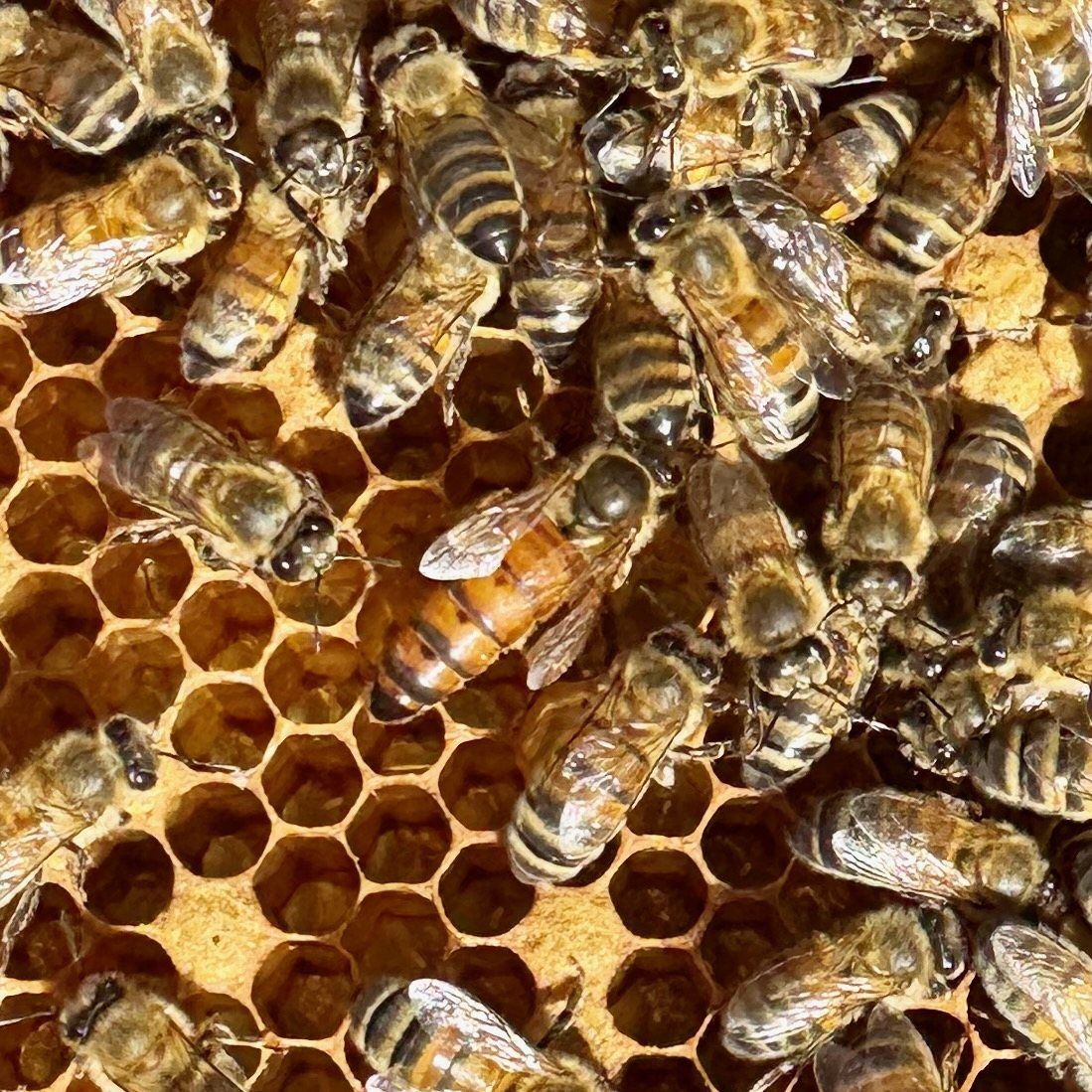
Bees make honey from flower nectar or from honeydew, the sugary liquid that aphids and other sap-feeding insects leave on leaves. Foragers add enzymes, evaporate the water and let it ripen in the comb before the beekeeper takes the surplus during the honey harvest. The result is a highly concentrated sugar solution.
Average values per 100 g (3.5 oz), from an analysis of eight assorted honeys published by EUFIC:
| Component | Per 100 g (3.5 oz) | What it means |
|---|---|---|
| Fructose | 41.8 g | The main sugar, sweeter than sucrose |
| Glucose | 34.6 g | The sugar that crystallizes |
| Water | 17.5 g | Above about 20%, honey can ferment |
| Protein | 0.4 g | Traces, including bee enzymes |
| Fat | 0 g | None |
| Energy | 288 kcal | About 60 calories in a 21 g tablespoon |
The last 1 to 2% is a mix of organic acids (average pH 3.9, about as acidic as orange juice), minerals, traces of vitamins, enzymes, pigments, pollen grains and the aroma compounds that make Southern tupelo taste nothing like Midwestern clover or Pacific Northwest buckwheat.
The glucose-to-fructose ratio varies by floral source. It explains why clover or alfalfa honey can turn solid within weeks, while tupelo, unusually rich in fructose, stays liquid for a long time. Crystallization is natural, not a sign of spoilage; see our guide to crystallized honey.
Vitamins and minerals in token amounts
Honey is often marketed as “loaded with vitamins and minerals.” The numbers do not back that up: EUFIC notes that the vitamins and minerals in honey amount to less than 1% of the recommended daily intake. Potassium is the most abundant mineral, and vitamin C is present only in traces. Dark honeys such as buckwheat, sourwood or avocado contain more minerals and antioxidant phenolic compounds than pale honeys like orange blossom or sage, but at the amounts people eat, their contribution to the diet is small.
What “honey” means on a US label
The United States has no federal standard of identity for honey, but FDA’s 2018 guidance on the proper labeling of honey says that a product labeled simply “honey” must be just that. If sugar, corn syrup or another sweetener has been added, the product cannot be called honey alone; it must carry a name that reflects the blend, with the ingredients listed. Some states go further with their own honey standards: Florida, for example, has a standard of identity for honey in its Administrative Code (rule 5K-4.027). Check with your state department of agriculture. To learn how to read origin, grade and “raw” claims, see our guide on how to choose honey.
How many calories and how much sugar does honey have?
Ounce for ounce, honey has slightly fewer calories than granulated sugar because about a sixth of it is water. Sugar is pure sucrose at about 400 calories per 100 g. EUFIC’s average for honey is 288 calories per 100 g, and other food composition tables give slightly higher values, around 300, depending on the honeys tested.
| Amount | Approximate weight | Calories in honey | Calories in granulated sugar |
|---|---|---|---|
| 1 teaspoon | 7 g (0.25 oz) | About 20 | 16 (a teaspoon of sugar weighs only about 4 g) |
| 1 tablespoon | 21 g (0.75 oz) | 60 to 65 | 48 (about 12 g) |
| 3.5 oz | 100 g | About 290 to 300 | 400 |
That table makes the trap obvious: spoon for spoon, honey has more calories than sugar, because honey is so dense. Its only real advantage is that fructose tastes sweeter than sucrose, so some people use a little less.
Honey counts as added sugar on the label
Under FDA’s June 2019 guidance, a jar of pure honey does not have to show an “Includes Xg Added Sugars” line, a change made by the 2018 Farm Bill. It must still show a percent Daily Value for added sugars, because the sugars in honey count toward your added sugar intake when you spoon it into food. FDA encourages a “†” symbol and a footnote explaining this. Its example honey label reads: “One serving adds 17g of sugar to your diet and represents 34% of the Daily Value for Added Sugars.” In other words, one tablespoon of honey uses up about a third of the 50 g Daily Value.
What federal dietary advice says
The Dietary Guidelines for Americans 2025-2030, released by HHS and USDA in January 2026, take a firmer line than earlier editions, and they name honey in their list of added sugars. They state that “no amount of added sugars or non-nutritive sweeteners is recommended or considered part of a healthy or nutritious diet,” and add that one meal should contain no more than 10 g of added sugars. Sugars naturally present in fruit and plain milk do not count. For children, the guidelines say to avoid added sugars from birth to age 4, and that no amount is recommended from 5 to 10. The previous edition had set a ceiling of 10% of daily calories from age 2, about 50 g on a 2,000-calorie diet.
For most adults, that makes honey a small, deliberate pleasure: a teaspoon in tea or on yogurt (about 6 g of sugar, within the 10 g per meal) rather than a “healthy” sweetener to use freely.
Is honey better for you than sugar?
A glycemic index only slightly lower
The glycemic index (GI) compares how fast a food raises blood glucose with pure glucose. In the international tables published in Diabetes Care in 2008 by Atkinson, Foster-Powell and Brand-Miller, a GI of 55 or below is low and 70 or above is high. Their averages:
| Product | Average GI | Category |
|---|---|---|
| Glucose | 103 | High (reference 100) |
| Sucrose (table sugar) | 65 | Medium |
| Honey (average) | 61 | Medium |
| Fructose | 15 | Low |
The gap between honey and sugar is small. It depends mostly on fructose content: a high-fructose honey such as tupelo or black locust should score lower than a high-glucose honey such as clover or canola. Either way, honey clearly raises blood glucose.
What the Toronto meta-analysis found
The study most often cited in honey’s favor is a systematic review from the University of Toronto, led by John Sievenpiper and published online in Nutrition Reviews in November 2022. It pooled 18 controlled trials with 1,105 participants. In those trials, eating honey daily, often for several weeks, was linked to a small drop in fasting blood glucose (about 3.6 mg/dL, or 0.2 mmol/L), total and LDL cholesterol and triglycerides, and a small rise in HDL cholesterol.
Three caveats matter:
- the certainty of the evidence was low for most outcomes, by the authors’ own grading; only the HDL increase was rated high certainty;
- the benefits showed up mostly with raw honey and with certain single-flower honeys, notably black locust (Robinia, sold in Europe as “acacia”) and clover, while processed honey showed weaker effects;
- honey was eaten “within a healthy dietary pattern,” in the authors’ words, not on top of a sugary diet.
The authors frame it as a swap. Replacing the sugar in your coffee or oatmeal with the same amount of honey may be a slightly better choice. Adding honey to a diet already heavy in sugar is not.
Is honey OK if you have diabetes?
Honey is not forbidden if you have type 1 or type 2 diabetes, but it is not a diabetes-friendly sugar either. It is about 80% carbohydrate, its GI of about 61 is close to table sugar, and a tablespoon carries about 17 g of sugar.
If you have diabetes:
- Count honey as carbohydrate, the same way you would count jam or syrup, not as a free food.
- Have small amounts with a meal, where fiber, protein and fat slow absorption, rather than on its own or in a drink.
- Choose honey for flavor, not for health claims. High-fructose honeys may have a slightly smaller effect on blood glucose, but the difference is limited.
- Treat low blood sugar the way your plan says. The CDC lists 1 tablespoon of sugar, honey or syrup among fast-acting options, alongside 4 oz (½ cup) of juice or regular soda and glucose tablets or gel; ask your care team which suits you.
- Talk to your doctor, diabetes educator or a registered dietitian, especially if you use insulin or another medicine that can cause lows.
The Toronto results on fasting glucose involved moderate amounts of honey replacing other sugars in an already healthy diet, with low certainty. They do not make honey a treatment for diabetes or a way to prevent it.
Does honey work for a cough?
What the American Academy of Pediatrics says
This is honey’s best-supported use. On HealthyChildren.org, the AAP advises parents of children 1 year and older to “consider using honey, 2 to 5 mL, as needed,” which is about half a teaspoon to one teaspoon, and states: “Do not give infants under 1 year honey.” The same page says over-the-counter cough and cold medicine is not recommended under age 4 and should be used from 4 to 6 only if your child’s doctor recommends it.
The Penn State buckwheat honey trial
The best-known US trial was run at Penn State College of Medicine by Ian Paul and colleagues and published in Archives of Pediatrics & Adolescent Medicine in December 2007. It enrolled 105 children aged 2 to 18 with colds and nighttime cough. Parents gave a single dose of dark buckwheat honey, honey-flavored dextromethorphan (the “DM” in many cough syrups) or nothing, 30 minutes before bed.
Honey was significantly better than no treatment for cough frequency and for a combined symptom score. Dextromethorphan was not better than no treatment on any measure. Honey and dextromethorphan did not differ significantly from each other, and parents rated honey most favorably.
The wider evidence: Cochrane and Oxford
The Cochrane review by Oduwole and colleagues, updated in April 2018, pooled trials in children aged 12 months to 18 years with acute cough:
| Honey compared with | Result | Certainty |
|---|---|---|
| Placebo | Less frequent, less severe and less sleep-disturbing cough; cough about 0.7 days shorter | Moderate |
| No treatment | Less frequent and less severe cough | Moderate |
| Diphenhydramine (Benadryl) | Small difference in favor of honey | Low |
| Dextromethorphan | No clear difference | Low |
| Albuterol (salbutamol) | Cough about 0.5 days shorter | Moderate |
Commenting in Paediatrics & Child Health, pediatrician Sarah Barker noted that the benefit amounts to about 2 points on a 7-point scale for a single night and is probably small, yet called honey “a fairly reasonable option” for children over 1, given that over-the-counter cough medicines have not been shown to work in young children. In the Cochrane review, side effects such as stomachache, nausea and vomiting were reported in about 21 in 100 children given honey against 11 in 100 given a placebo (moderate certainty).
For adults, a 2021 University of Oxford meta-analysis of 14 studies in BMJ Evidence-Based Medicine found that honey reduced cough frequency and severity compared with usual care in upper respiratory infections. The authors suggested it as a cheap alternative to antibiotics, which are often prescribed for these viral illnesses without benefit, while flagging a moderate risk of bias and only two placebo-controlled studies.
How to use honey for a cough
| Age | Suggested amount | When |
|---|---|---|
| Under 12 months | No honey, ever | |
| 1 to 5 years | 1/2 teaspoon (about 2.5 mL) | At bedtime or as needed |
| 6 to 11 years | 1 teaspoon (about 5 mL) | At bedtime or as needed |
| 12 years and adults | 1 to 2 teaspoons | At bedtime, or in a warm drink |
The first two rows follow the AAP’s 2 to 5 mL range; the best dose is not known. Dark honeys such as buckwheat were used in the Penn State study, but no trial shows they work better than lighter honeys. Give it from a spoon or in warm (not hot) water or tea, and brush teeth or rinse with water afterward.
Honey treats the symptom, not the cause. Barker cites figures showing that half of acute coughs are gone by day 10 and 90% by day 25. Call your doctor for a cough lasting more than three weeks, a high or persistent fever, coughing up blood, or any cough in a young baby, and seek emergency care for any trouble breathing.
Honey for wounds and burns: what about medical honey?
Why honey slows bacteria
Honey’s antibacterial action comes from three things: its low water content, which pulls water out of microbes; its acidity; and hydrogen peroxide, produced by a bee enzyme when honey is diluted by wound fluid. Some honeys, manuka especially, have extra compounds of their own.
What the Cochrane review concluded
The Cochrane review by Jull and colleagues, published in March 2015, analyzed 26 trials with 3,011 participants:
- partial-thickness burns: honey healed them about 4.7 days faster than conventional dressings across two trials and 992 patients, with high-quality evidence for this outcome; compared with silver sulfadiazine cream, healing at six weeks was similar, with fewer side effects;
- infected surgical wounds: more healed with honey than with antiseptic washes and gauze, in a single trial of 50 patients, with moderate-quality evidence;
- venous leg ulcers: no clear effect (two trials, 476 patients, low-quality evidence);
- other wounds: low or very low quality evidence.
The reviewers conclude it is difficult to draw overall conclusions about topical honey.
Medical honey is an FDA-cleared device
On November 7, 2007, the FDA cleared Medihoney primary dressings with active manuka honey, made by Derma Sciences of North Attleboro, Massachusetts, through its 510(k) premarket notification process, under the device category “dressing, wound, drug.” Several honey-based gels and dressings have since been sold in pharmacies and used in hospitals. They are sterilized and made for wound care.
Grocery honey is not sterile and can contain bacterial spores, pollen and wax. On a small clean scrape in a healthy adult, it is unlikely to do harm, but it has not been studied. For burns beyond a small area, deep or dirty wounds, animal bites, wounds that are oozing or turning red, or any wound in someone with diabetes, see a pharmacist, nurse or doctor.
Is manuka honey worth the price?
Manuka honey comes from New Zealand and Australia, from the flowers of Leptospermum scoparium. Its distinguishing feature is chemical: high levels of methylglyoxal (MGO), which forms in the honey from a nectar compound, dihydroxyacetone.
In 2008 Thomas Henle’s group at the Technical University of Dresden (Mavric and colleagues) identified MGO as manuka’s main antibacterial compound. In six New Zealand manuka honeys they measured 38 to 761 mg/kg, up to 100 times more than in conventional honeys.
| Question | Answer |
|---|---|
| Is the antibacterial activity real? | Yes, in the lab, and it underpins FDA-cleared manuka wound dressings |
| Does eating manuka prevent infections? | No good human study shows it |
| What does “MGO 400+” mean? | At least about 400 mg of methylglyoxal per kilogram, as stated by the seller |
| Should I buy it for a cough? | The landmark US cough trial used buckwheat honey; no evidence manuka works better |
| Is it safer for babies? | No. The botulism risk applies to every honey |
Manuka sells for many times the price of American honeys and is a frequent target of fraud. If you buy it, look for a measured MGO or UMF grade and New Zealand origin, not health promises. For your morning toast, a jar of local wildflower, sourwood, orange blossom or sage honey offers more flavor per dollar.
Why is honey dangerous for babies?
This is the one absolute rule in this article. Never give honey to a baby younger than 12 months: not on a spoon, not in water or formula, not on a pacifier. The CDC and the AAP both advise against honey before 12 months because of the risk of infant botulism. It applies to all honey: raw, local, organic, pasteurized and manuka.
Infant botulism
Honey can contain spores of Clostridium botulinum, a soil bacterium that bees can carry back to the hive. Older children and adults pass the spores harmlessly. In a baby’s immature gut, they can germinate and produce botulinum toxin.
The CDC lists these signs in infants, which may not all appear at once:
- constipation;
- poor feeding;
- drooping eyelids;
- pupils that are slow to react to light;
- a face showing less expression than usual;
- a weak cry that sounds different than usual.
The CDC calls botulism a medical emergency: if your baby shows these signs, see a doctor or go to the emergency room immediately. “Do not wait.”
How common is it in the US?
Infant botulism is the most common form of botulism in the United States. In its 2021 surveillance summary, the CDC reported 181 laboratory-confirmed infant botulism cases out of 243 confirmed botulism cases of all types, from 31 states. The median age was 3 months, ranging from 12 days to 11 months, and no infants died. Honey is not the cause of most of these cases; many babies swallow spores from soil and dust, which cannot be avoided. Honey is the one known source parents can remove from the diet, which is why the rule exists.
Cooking does not reliably destroy the spores, so skip baked goods and homemade foods sweetened with honey for babies too. After 12 months, a child’s gut is mature enough that this particular risk falls away, and honey becomes another added sugar, which the Dietary Guidelines say to avoid through age 4.
Local honey, raw honey and honey at bedtime: common questions
Does local honey help seasonal allergies?
The idea is that eating local pollen in honey desensitizes you. The evidence does not support it. The Asthma and Allergy Foundation of America explains that most seasonal allergies come from wind-pollinated trees, grasses and weeds such as ragweed, while bees mostly collect pollen from brightly colored, insect-pollinated flowers. Bee enzymes, processing and digestion further break down whatever pollen is there. In a small University of Connecticut study published in 2002, people with seasonal allergies who ate a tablespoon of honey a day reported no relief. Buy local honey for flavor and to support local beekeepers, and ask your doctor about proven allergy treatments.
Does honey help you sleep?
No good study shows that honey improves sleep in healthy people. The only nighttime benefit found involved coughing: in the pediatric trials, honey at bedtime eased cough-related sleep disruption for children and their parents. A spoonful in chamomile tea is a pleasant ritual, not a sleep aid. Brush your teeth afterward.
Does hot tea destroy honey’s benefits?
Heat breaks down some enzymes and delicate compounds and raises levels of HMF, a breakdown product used internationally to flag overheated or old honey. In the Toronto review, processed honey showed weaker effects than raw honey. Let tea cool for a few minutes before stirring in honey. The sugar and calories do not change.
Can honey cause allergic reactions?
Rarely, but it can. Honey contains traces of pollen and bee proteins, and sometimes propolis. People with severe pollen allergies, a bee sting allergy or propolis allergy should check with their doctor or allergist. The caution is stronger still for royal jelly, which has triggered severe reactions in people with asthma or allergies.
Is raw honey healthier?
“Raw” has no federal legal definition, but it generally means honey that has not been heated or finely filtered. It keeps more of its enzymes, aroma and pollen, which is a real quality and flavor advantage, and the Toronto review hints it may matter for metabolic effects. USDA organic certification covers how the apiary and forage are managed. Neither makes honey a medicine. Floral source matters most for taste: see which plants for bees give which honeys, or explore our honeys section.
What health claims can a honey label make in the US?
The FDA recognizes three kinds of claims on foods: health claims, which link a food or substance to a lower risk of a disease and must be authorized by FDA; nutrient content claims such as “low” or “free”; and structure/function claims, which describe an effect on normal body structure or function and are not pre-approved. A structure/function claim may not link the food, explicitly or implicitly, to a disease. A claim that a product treats, cures or prevents a disease makes it a drug in the eyes of the law.
FDA has authorized no health claim for honey. In practice, a honey label or website should not say that it:
- “cures colds,” “fights infection” or is “antibacterial” in a medical sense;
- “treats allergies” or “prevents hay fever”;
- “heals wounds,” unless the product is an FDA-cleared wound dressing;
- “lowers blood sugar” or is “safe for diabetics.”
A beekeeper can, however, describe the honey honestly: floral source, region, color, flavor, texture and how it was harvested. If a seller promises medical effects, treat that as a red flag about the seller, not a mark of quality.
Using honey well, in short
- Enjoy honey as a treat, swapping it for other sugars rather than adding it, keeping in mind that the Dietary Guidelines recommend no amount of added sugars.
- Try it for coughs in anyone 1 year or older, at the AAP’s 2 to 5 mL, knowing the effect is modest.
- Leave wounds to FDA-cleared medical honey and professional advice.
- Count it as carbohydrate if you have diabetes or are watching your weight.
- Never give it to a baby under 12 months.
- Buy genuine, clearly labeled honey, ideally from a local beekeeper who can tell you where the hives are.
Frequently asked questions
Is honey healthier than sugar?
Only a little. Honey is about 80% sugar by weight, and on the Nutrition Facts label its sugars count toward the Daily Value for added sugars, just like table sugar. Its average glycemic index of 61 is close to sucrose at 65. The modest benefits seen in trials came when honey replaced other sugars in a healthy diet, not when it was added on top.
Does honey actually work for a cough?
Modestly, yes, in anyone 1 year or older. The American Academy of Pediatrics suggests 2 to 5 mL of honey, roughly half to one teaspoon, as needed for children 1 and up. A Penn State trial found buckwheat honey beat no treatment for nighttime cough, and a Cochrane review found honey probably works slightly better than placebo. It eases the symptom rather than curing the cold.
Why can't babies have honey?
Honey can carry spores of Clostridium botulinum. In a baby's immature gut, the spores can grow and make the toxin that causes infant botulism, which weakens the muscles used for feeding and breathing. The CDC and the AAP say no honey before 12 months, in food, water, formula or on a pacifier. In 2021 the CDC confirmed 181 infant botulism cases, the most common form of botulism in the US.
How many calories are in a tablespoon of honey?
About 60 to 65 calories. A tablespoon of honey weighs about 21 g (0.75 oz) and carries roughly 17 g of sugar, which is the figure FDA uses in its own example honey label. A teaspoon is about 20 calories. Ounce for ounce honey has fewer calories than granulated sugar because it contains water, but a spoonful of honey is heavier, so spoon for spoon it has more.
Is honey good for diabetics?
It is not off limits, but it is not a diabetic-friendly sugar. Honey raises blood glucose nearly as much as table sugar, so count each tablespoon as about 17 g of carbohydrate. Use small amounts with meals, in place of other sweets. For low blood sugar, the CDC lists 1 tablespoon of honey among quick fixes, but follow the plan your care team gave you. Ask your doctor or a registered dietitian.
Is manuka honey worth the price?
For wound care, manuka has a real basis: it contains methylglyoxal, a strong antibacterial compound, and the FDA cleared a manuka honey wound dressing in 2007. For eating, there is no good human evidence that manuka prevents infections or soothes coughs better than other honeys. In the main US cough trial, the honey used was dark buckwheat, which costs far less.
Does local honey help with seasonal allergies?
The evidence says no. The Asthma and Allergy Foundation of America notes that most seasonal allergies come from wind-borne tree, grass and weed pollen, which bees rarely collect. In a small University of Connecticut trial published in 2002, people who ate a tablespoon of honey a day got no relief from their symptoms. Enjoy local honey for its flavor and to support beekeepers, not as allergy treatment.
Can I use honey from the kitchen on a burn or cut?
Not as a substitute for proper care. The studies showing faster healing of partial-thickness burns used medical-grade honey that is sterilized and sold as an FDA-cleared wound dressing. Grocery honey is not sterile. For anything beyond a small clean scrape, especially burns, deep or dirty wounds, animal bites or any wound in someone with diabetes, see a pharmacist, nurse or doctor.
Sources
- Coughs and colds: medicines or home remedies?, American Academy of Pediatrics, HealthyChildren.org
- Foods and drinks to avoid or limit (infant and toddler nutrition), Centers for Disease Control and Prevention
- National Botulism Surveillance Summary, 2021, Centers for Disease Control and Prevention
- Symptoms of botulism, Centers for Disease Control and Prevention
- Treatment of low blood sugar (hypoglycemia), Centers for Disease Control and Prevention
- Guidance for Industry: The Declaration of Added Sugars on Honey, Maple Syrup, Other Single-Ingredient Sugars and Syrups, and Certain Cranberry Products (June 2019), U.S. Food and Drug Administration
- Guidance for Industry: Proper Labeling of Honey and Honey Products (February 2018), U.S. Food and Drug Administration
- Label claims for conventional foods and dietary supplements, U.S. Food and Drug Administration
- 510(k) premarket notification K072956: Medihoney primary dressings with active manuka honey, U.S. Food and Drug Administration
- Dietary Guidelines for Americans 2025-2030, U.S. Department of Health and Human Services and U.S. Department of Agriculture
- Effect of honey, dextromethorphan, and no treatment on nocturnal cough and sleep quality for coughing children and their parents (Archives of Pediatrics & Adolescent Medicine, 2007), Paul IM, Beiler J, McMonagle A et al., Penn State
- Honey for acute cough in children (Cochrane Database of Systematic Reviews, 2018), Oduwole O, Udoh EE, Oyo-Ita A, Meremikwu MM, Cochrane Library
- Effectiveness of honey for symptomatic relief in upper respiratory tract infections: a systematic review and meta-analysis (BMJ Evidence-Based Medicine, 2021), Abuelgasim H, Albury C, Lee J, BMJ
- Honey for acute cough in children (Paediatrics & Child Health, 2016), Barker SJ, via PubMed Central (National Library of Medicine)
- Honey as a topical treatment for wounds (Cochrane, 2015), Jull AB, Cullum N, Dumville JC et al., Cochrane
- International tables of glycemic index and glycemic load values: 2008 (Diabetes Care), Atkinson FS, Foster-Powell K, Brand-Miller JC, via PubMed Central
- Honey and cardiometabolic risk factors: a systematic review and meta-analysis (Nutrition Reviews, 2023), Ahmed A, Tul-Noor Z, Lee D et al., Sievenpiper JL, via PubMed
- The health benefits of honey and its nutritional value, European Food Information Council (EUFIC)
- Identification and quantification of methylglyoxal as the dominant antibacterial constituent of Manuka (Leptospermum scoparium) honeys from New Zealand (Molecular Nutrition & Food Research, 2008), Mavric E, Wittmann S, Barth G, Henle T, via PubMed
- AAFA explains: can honey help my seasonal allergies? (April 2022), Asthma and Allergy Foundation of America