How to start beekeeping: classes, state rules, costs and your first year
How to start beekeeping in the US: a bee club class, your state's apiary rules, packages vs nucs, the real cost of two Langstroth hives and a first-year plan.
To start beekeeping in the US, take a beginner class with your local bee club or extension service over the winter, check your state’s apiary registration rules and your local zoning, then order two nucs or packages for spring and set up two 10-frame or 8-frame Langstroth hives. Plan on roughly $1,100 to $1,600 for two hives with bees and basic gear, and put a varroa mite plan in place from day one, because mites are the main reason first-year colonies die.
There is no national license for beekeepers in the United States, and no single calendar either. A first season in Vermont and a first season in Florida look very different, so this guide names the region whenever timing matters. Regulations quoted are those in force in October 2026; your state department of agriculture has the final word.
How do you learn beekeeping in the US?
The best start combines a class in winter with hands-on time at a working apiary in spring. Most beekeepers learn through three routes, often all at once.
Bee clubs and “bee schools”
Nearly every region has a local or county beekeeping club, and most run a beginners’ course, often called a bee school, between January and March. In North Carolina alone, NC State Extension counts more than 80 county associations in the state beekeepers’ association, most meeting monthly, many offering new-beekeeper classes and mentors. A club is also where you find local nucs, used equipment and someone who will come and look when something goes wrong.
Extension services and Master Beekeeper programs
Land-grant universities run some of the most reliable beginner programs, and their materials are written for your climate:
- The University of Minnesota Bee Lab offers its Beekeeping in Northern Climates course online and in person, aimed at getting beginners through their first two years.
- Oregon State University Extension runs the Oregon Master Beekeeper Program. Its Apprentice level pairs you with a mentor, asks for nine online modules (including one on stings and anaphylaxis), an open-book exam and four mentor-signed field worksheets within two years, for a $350 fee.
- Penn State Extension publishes Beekeeping Basics, a 172-page guide to equipment, starting colonies and seasonal management.
Many other states have Master Beekeeper programs through their university or state association. Search your state’s extension service for “beekeeping.”
What to learn before your bees arrive
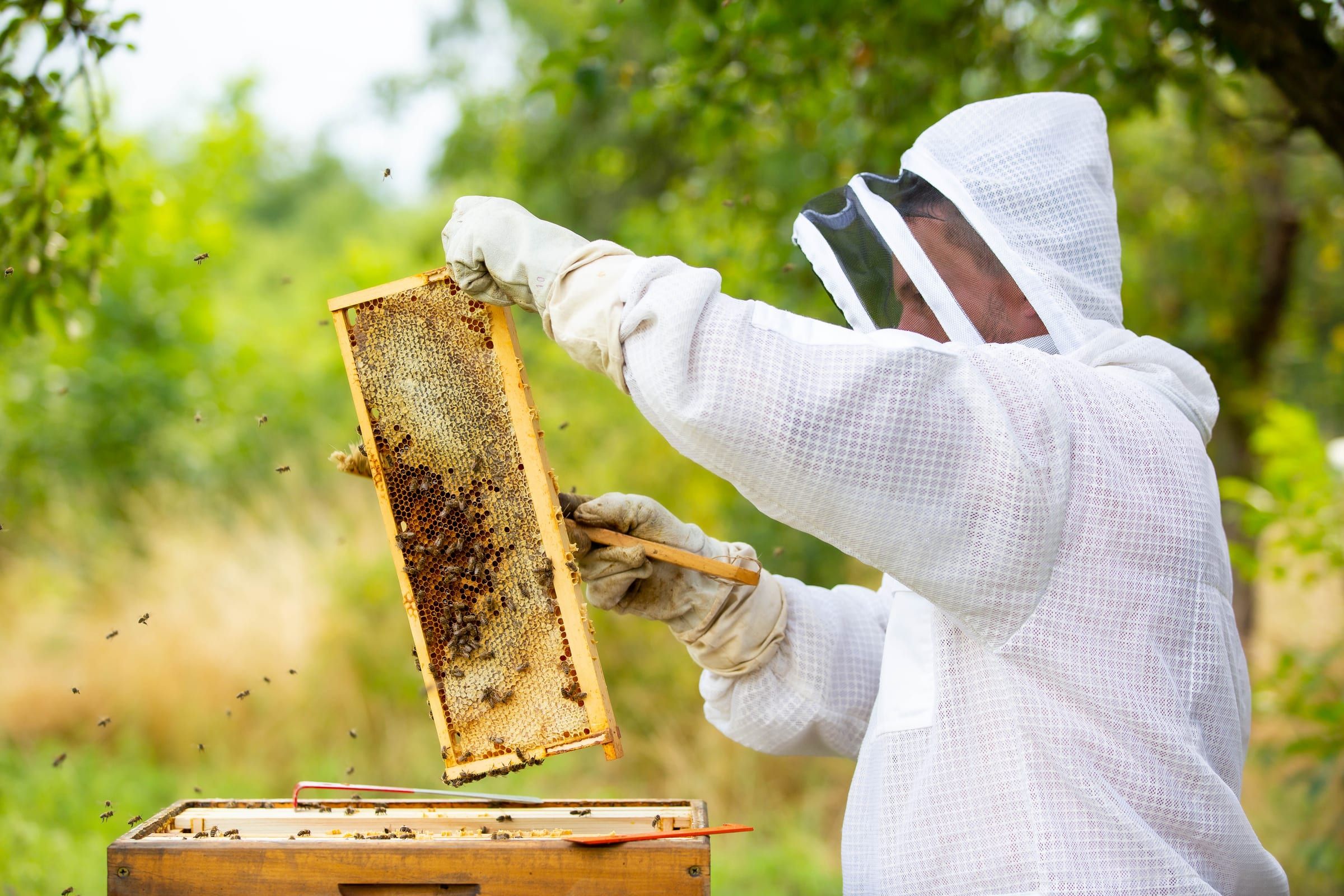
- Light and use a smoker so it stays lit for an hour, and open a hive without crushing bees.
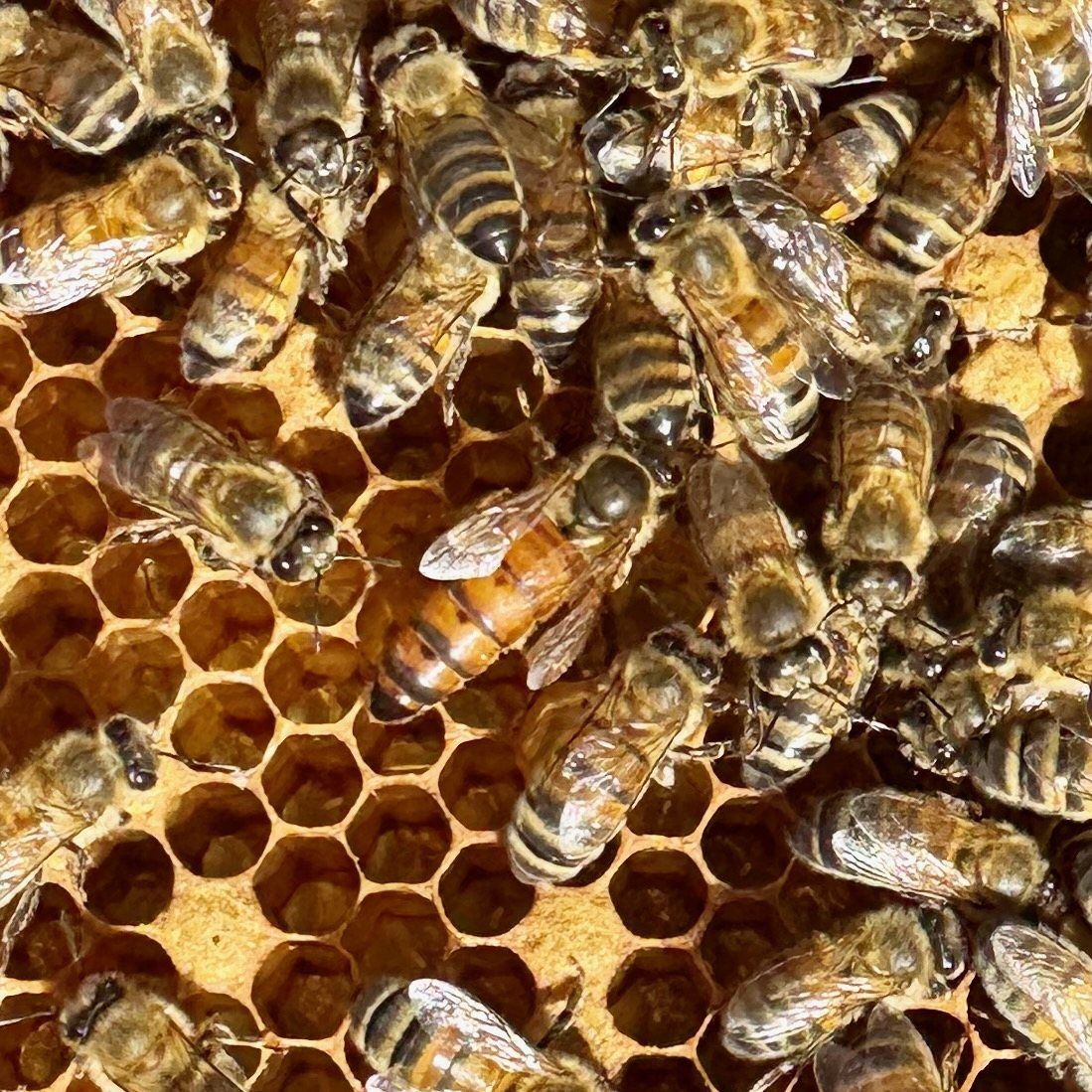
- Read a frame: eggs (proof the queen was laying in the last three days), open and capped brood, pollen, nectar and capped honey.
- Tell a healthy brood pattern from a sick one, and know the signs of American foulbrood and European foulbrood.
- Sample for varroa with an alcohol wash or sugar roll of about 300 bees.
- Recognize swarm preparations and know how you will split a colony before you need to.
Stings and allergies
Every beekeeper gets stung. For most people a sting means local pain and swelling that can last a day or two, and many beekeepers find their reaction lessens over time. A small number of people have a severe allergic reaction (anaphylaxis), which is a medical emergency. Oregon’s Master Beekeeper Program makes a module on stings and anaphylaxis part of its very first level for that reason. Before you start, talk to your doctor if you have ever had a strong reaction to a sting, tell your household where the hives are, and never work bees alone in a remote yard without a phone. Wear at least a veil every time: a sting near the eye is the one you most want to avoid. Scrape a stinger out quickly with a fingernail or hive tool, and puff smoke over the spot to mask the alarm scent that tells other bees to sting there.
Do you need a permit or registration to keep bees?
There is no federal permit to keep honey bees. Rules are set state by state, and then again by cities, counties and homeowners’ associations. Never assume one state’s rule applies in yours. A few examples show how much they vary:
| State | Registration | Details |
|---|---|---|
| Pennsylvania | Required under the 1994 Bee Law | $10, covers about two years |
| Ohio | Required | $5 per apiary by June 1 each year; within 10 days of acquiring bees or bringing them into the state |
| California | Required | Register with your county agricultural commissioner every January 1, or within 30 days of acquiring an apiary (Food and Agricultural Code sections 29040 and 29043) |
| Florida | Required for all colonies | Through the Florida Department of Agriculture and Consumer Services (FDACS); fee depends on colony count; inspection before a registration number is issued |
| Texas | Not required for hobbyists | Voluntary registration $35; bee removal operators must register; bees brought from another state need a health certificate and a $200 permit |
Why registration matters
State apiarists and apiary inspectors use registration to find colonies when there is a disease outbreak, to inspect for American foulbrood and to track pests such as small hive beetle. In Florida, registration is also part of the effort to limit the spread of Africanized bees: colonies must be free of Africanized genes before a registration number is issued, and hives on non-agricultural land come with a Beekeeper Compliance Agreement covering colony density and safety practices. NC State Extension advises new beekeepers in North Carolina to contact their regional inspector to register and arrange inspections, and notes that sellers of nucs must be registered with the state.
Your starting point is your state department of agriculture, which usually houses the state apiarist. Our guide to beekeeping laws by state collects the main rules.
Local zoning, HOAs and neighbors
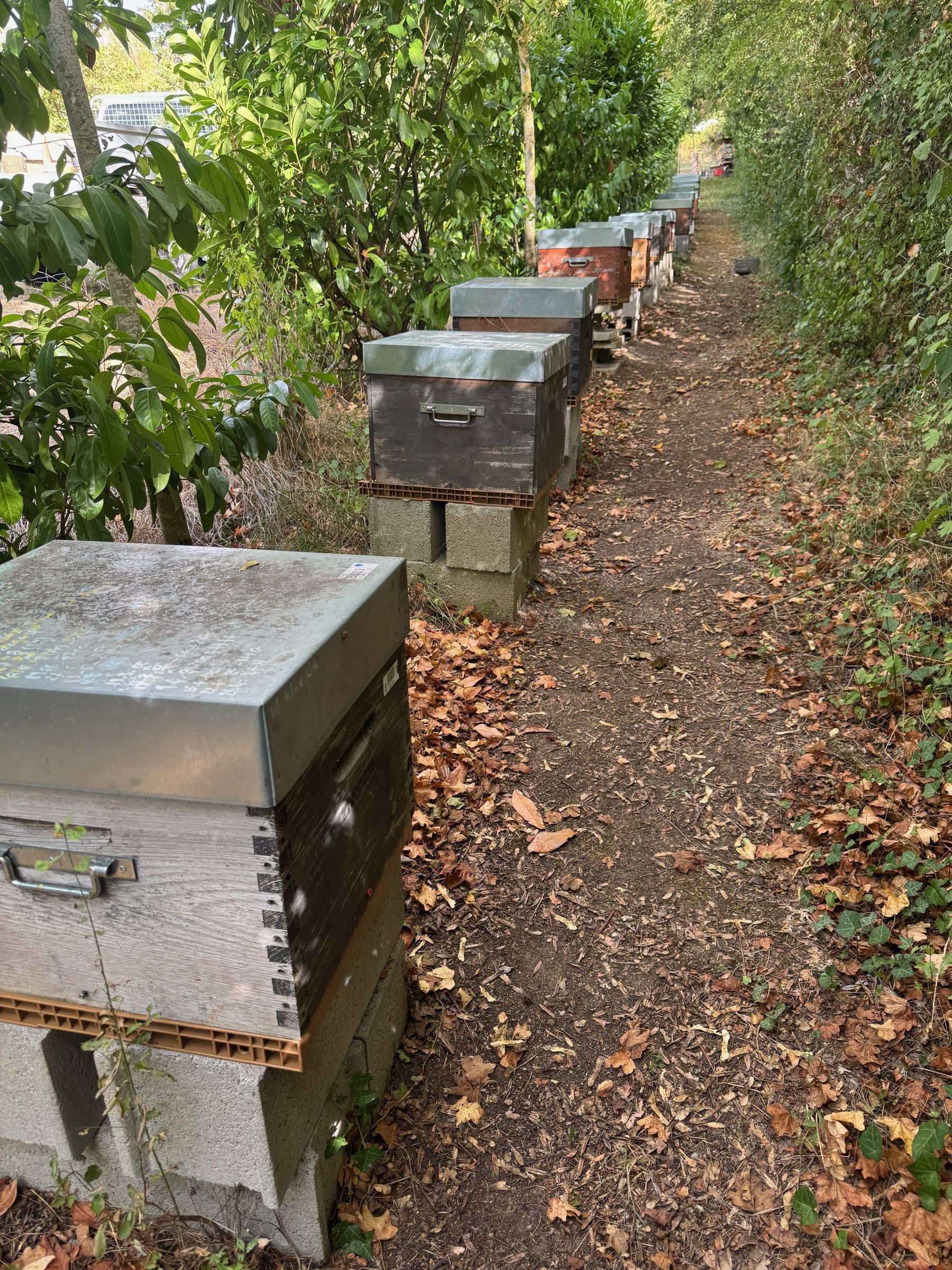
City and county ordinances may limit how many hives you can keep, require setbacks from property lines or require a flyway barrier, and HOA covenants can ban hives altogether. The Ohio Farm Bureau, for example, notes that beekeeping falls under the agricultural exemption from county and township zoning in Ohio, but that city rules, HOAs and deed restrictions still apply. Check before you buy. Then talk to your neighbors, face entrances away from them, use a fence or hedge so bees fly up and over, and give your bees a steady water source so they do not visit swimming pools. Our page on where to put a beehive has more on choosing a site.
Ask about insurance
Most homeowner’s policies were not written with beehives in mind. Ask your agent whether hives are covered and whether you need liability coverage, especially if you plan to sell honey or keep bees on someone else’s land.
How many hives should a beginner start with?
Two. NC State Extension puts it simply: “We recommend that a first-time beekeeper start with two full beehives.” Two colonies give you a basis for comparison, and if one becomes queenless you can move in a frame of eggs from the other so it can raise a new queen. A single colony has no backup.
Have spare equipment for at least one more hive. When a colony gets crowded in spring, a split or a swarm caught in your yard needs boxes, frames and a cover right away.
Which hive should you choose?
The Langstroth hive is the US standard, and every supplier, bee club and extension guide assumes it. Buy the same system as the beekeepers around you so you can trade frames and borrow equipment. Our guide to the Langstroth hive covers the parts in detail.
10-frame or 8-frame?
The 10-frame Langstroth is the most common. The 8-frame version uses the same frame sizes in a narrower box, so a full medium super weighs less, which matters if lifting is a concern. The bees do not mind either way; pick one width and keep it.
Deeps and mediums
Langstroth boxes come in three depths: deep (9⅝ in (24.4 cm)), medium (6⅝ in (16.8 cm)) and shallow (5¹¹⁄₁₆ in (14.4 cm)). A classic setup uses two deeps for the brood nest with mediums as honey supers. A full deep can weigh 80 lb (36 kg) or more, so many beekeepers now run all mediums, which means every frame fits every box. In the North, colonies are usually wintered in two deeps or three mediums; in the South, one deep plus a medium is often enough.
A typical starter kit has a bottom board (often screened), one or two deeps, a medium super, frames with foundation, an inner cover and a telescoping outer cover. One supplier lists a 10-frame kit with one deep, one medium and 20 frames at $191.49. You will need a queen excluder if you want brood-free honey supers, and more supers as the colony grows. See our list of beekeeping equipment for beginners for the rest.
Package bees or a nuc: how to get your first colony
There are three common ways to get bees, and the right one depends on your region and budget.
Nucs
A nuc (nucleus colony) is a small working colony on five frames: an egg-laying queen, brood, bees, and comb with honey and pollen. NC State Extension notes that a nuc becomes a mature hive quickly and is less likely to fail than other options. It is the best choice for most beginners, especially from a local beekeeper whose bees have already wintered in your climate. As a price reference, one Iowa supplier lists a five-frame Italian or Buckfast nuc with a marked queen at $250 for 2027 pickup.
Packages
A package is about 3 lb (1.4 kg) of bees shaken from several colonies, with a mated queen in a separate cage. Packages are produced mostly in California and the Southeast and shipped or picked up in early spring. They must build everything from scratch, so they need feeding and they grow more slowly than a nuc. The same Iowa supplier lists a 3 lb package with an Italian hybrid queen at $185. Install a package in the afternoon or evening, feed 1:1 sugar syrup, and check five to seven days later that the queen has been released and is laying.
Swarms
Swarms are free and appear from spring into early summer; NC State Extension puts swarm season in North Carolina at late March to early May. Beginners usually need help catching their first, and a swarm, like a package, needs time to build up. In regions with Africanized bees, treat any swarm of unknown origin with caution and requeen it if it proves defensive.
Which bees?
Most US packages and nucs come with Italian queens (gentle, build up fast, can overrun their stores in a long winter), Carniolan queens (dark, thrifty, build up quickly in spring and swarm readily), or hybrids. Russian bees, bred from stock imported by USDA ARS for varroa resistance, and lines bred for hygienic behavior are worth asking about. For a beginner, gentle temper and good health matter more than the breed name on the cage.
Africanized bees in the South
Africanized honey bees were first found in the US in Texas in 1990 and are now present in parts of the Southwest and the Southeast, including Florida. They look like other honey bees but defend their nest far more aggressively. If you live in these areas, buy queens and nucs from registered suppliers, keep hives well away from people and animals, and requeen any colony that becomes unusually defensive. Follow your state’s rules; Florida’s registration process screens colonies for Africanized genes.
How much does it cost to start beekeeping?
The table below gives indicative 2026 prices for new equipment and bees. Used equipment and club sales can lower them, but never use old comb or boxes of unknown history without checking for American foulbrood.
Start-up costs for two colonies
| Item | Indicative price (2026) |
|---|---|
| Two 10-frame hive kits (deep, medium, frames, covers, bottom board) | about $190 to $300 each |
| Second deep or extra medium per hive, with frames | about $50 to $80 each |
| Two queen excluders | about $15 to $30 each |
| Two nucs or two 3 lb packages | about $370 to $500 |
| Jacket or suit with veil, gloves | about $70 to $200 |
| Smoker, hive tool, bee brush | about $50 to $90 |
| Feeders, varroa testing kit, first mite treatment | about $60 to $120 |
| Total for two colonies | about $1,100 to $1,600 |
NC State Extension puts a basic starter kit with hive, smoker, hive tool and veil at about $300, and a deluxe kit at about $600. A manual two- to four-frame extractor costs roughly $200 to $500; many clubs lend one to members, so you can wait until your first real crop.
Yearly costs
- Club and state association dues.
- State registration where required, from a few dollars a year.
- Varroa treatments: most colonies need two or more a year.
- Sugar for spring and fall feeding; in a poor year this can mean 20 lb (9 kg) or more per colony.
- Replacement bees: plan on replacing some colonies. The U.S. Beekeeping Survey estimated that 55.6% of managed colonies were lost between April 2024 and April 2025, a record, and 39.9% between April 2025 and April 2026, with backyard beekeepers losing more than commercial operations.
- Jars, labels and possibly a food license if you sell honey.
How much honey to expect
Your first year’s honey goes mostly to the bees. A colony started from a package or nuc has to draw comb and build its own winter stores, and UF/IFAS Extension puts the stores a colony needs in the North at about 90 lb of honey. From the second year, a strong colony can make a surplus. USDA’s National Agricultural Statistics Service reported 48.0 lb per colony nationally in 2025, from 2.41 million colonies producing 116 million lb, at an average of $3.05 per pound. North Dakota led all states, with California, Montana and South Dakota next.
Your first year, region by region
The US is too big for one calendar. Use the version nearest to you, then check with your local club. Our beekeeping calendar goes month by month.
Northeast and Midwest
- January to March: bee school; order bees; assemble and paint hives; register with your state.
- April to May: packages arrive in April, nucs in May; feed 1:1 syrup until the colony draws out its boxes; inspect every 7 to 10 days.
- June to July: main flow from clover, basswood and other summer bloom; add supers; watch for swarm cells in strong colonies.
- August: test for mites and treat as soon as supers are off, to protect the winter bees being raised now.
- September to October: goldenrod and aster; feed 2:1 syrup if stores are short; reduce entrances; fit mouse guards.
- November to March: colonies cluster; heft hives for weight; give fondant or sugar if they feel light in late winter.
South (Southeast and Gulf states)
The season starts six to eight weeks earlier. Spring flows can begin in February and run into May, with tupelo honey from the river swamps of northwest Florida and south Georgia in April and May and sourwood in the southern Appalachians in early summer. Summer can bring a dearth when little blooms, and the long warm season means more mite generations and more small hive beetles. Winters are short, so colonies need fewer stores but keep raising brood, and mites with them.
California
Packages and queens come from here, and spring starts early: orange blossom in March and April, then sage and wildflowers depending on rain. Almond pollination in February draws colonies from across the country, so you may hear beekeepers plan their year around it. Summer and fall dearths are common in dry years, and supplemental feeding and water are often needed.
Pacific Northwest
Wet springs delay buildup, and blackberry in June and July is often the main crop west of the Cascades. Long, damp winters mean ventilation, moisture control and solid winter stores matter as much as cold protection.
How do you keep your first colonies alive?
Most first-year colonies that die are lost to one of four problems.
1. Varroa mites
Varroa mites and the viruses they spread are the main cause of colony loss. The Honey Bee Health Coalition’s Tools for Varroa Management recommends sampling about 300 adult bees, about ½ cup lightly packed, with an alcohol wash or sugar roll, and gives action thresholds by season:
| Colony phase | Control promptly above |
|---|---|
| Dormant (winter) | 1 mite per 100 bees (1%) |
| Population increase (spring) | 2 to 3% |
| Peak population (summer) | 3% |
| Population decrease (late summer, fall) | 2 to 3% |
Use only products registered by the EPA for varroa control, and follow the label to the letter: the label is the law. EPA’s list, updated in September 2026, includes Apivar and Amiflex (amitraz), Apiguard (thymol), ApiLife Var (thymol and essential oils), Formic Pro and Mite Away Quick Strips (formic acid), Api-Bioxal, EZ-OX and VarroXsan (oxalic acid), HopGuard 3 (hop beta acids), Apistan (fluvalinate), CheckMite+ (coumaphos), and newer products based on Vadescana dsRNA. Mite resistance to fluvalinate and coumaphos is widespread, so beginners rarely start with those. Rotate active ingredients, note honey super restrictions, and check that a product is registered in your state too. Our guide to varroa mites covers testing and treatment in depth.
2. Starvation
Colonies starve in spring when brood rearing outpaces the flow, during summer dearths, and in late winter. Feed 1:1 syrup (equal weights of sugar and water) to build up packages and nucs, 2:1 in fall to top up stores, and fondant or dry sugar in winter.
3. Queen problems
No eggs for a week or more, scattered cells with multiple eggs, or bullet-shaped drone brood in worker cells all point to a failing or missing queen. Act early: a frame of eggs from your second colony buys time while you order a new queen.
4. Swarming
A strong colony in spring will try to swarm. Inspect every 7 to 10 days, give space by adding boxes before they are full, and split colonies that show capped queen cells.
How much time does it take?
Through spring and early summer, plan to open each colony every 7 to 10 days. For a beginner, a careful inspection takes 20 to 40 minutes a hive, so two hives plus lighting the smoker, cleaning up and writing notes come to roughly two hours a week from April to July in the North, and from February or March in the South. Swarm season, honey harvest and mite treatments add busier weekends. From late fall through winter there is very little to do beyond hefting hives for weight, checking that covers are secure after storms, and cleaning and repairing equipment indoors. Choose an apiary site you can reach easily, because a hive you have to drive an hour to visit is a hive that gets inspected too rarely.
Keep records
Write down what you see at every inspection: temper, eggs, frames of brood, stores, queen cells, mite counts and treatments, with product and dates. Records show you trends, and some states and product labels expect them.
Selling your honey in the US
Honey sales are regulated mainly by your state, with federal labeling rules on top.
Federal labeling
The FDA’s guidance on the proper labeling of honey says a product containing only honey must be named “honey.” A product mixing honey with a sweetener such as corn syrup cannot be called honey and needs a descriptive name such as “blend of honey and corn syrup” and an ingredient list. Naming a floral source is optional, but if you call it “clover honey” or “orange blossom honey,” you need to be able to show that plant is the chief floral source.
State rules: two examples
- Pennsylvania: the state’s January 2024 guidance exempts honey produced, processed and sold on the same farm from food facility licensing. You must register, usually with a $35 fee, if you sell off the premises or to other businesses, buy in other beekeepers’ honey, sell in another state, or use “PA Preferred” on the label; wholesaling honey from your own farm needs registration but no fee. Labels need the name “honey,” your name and address, and the net weight; a best-by date is not required.
- Florida: under the cottage food law, honey can be sold directly to consumers without a food permit if it is bottled in your home kitchen. Retail or wholesale sales, and prepared foods containing honey, need commercial permits.
Cottage food rules, farmers market permits and sales tax vary across the other states, so ask your state department of agriculture’s food safety division. A simple label with “honey,” the floral source if you are sure of it, your name and address, and the net weight in ounces and grams covers the basics almost everywhere.
Your first-season checklist
- Fall: find your local bee club and your state’s apiary rules; check zoning and HOA covenants.
- Winter: take a bee school or extension course; order two nucs or packages; buy or build two hives plus spare boxes.
- Early spring: register your hives if your state requires it; set up your site with water and a flyway barrier.
- Bees arrive: install, feed, and inspect every 7 to 10 days.
- Summer: add space as needed; test for mites monthly.
- Late summer: treat for varroa when counts pass the threshold, after pulling any honey supers.
- Fall: feed to winter weight for your region; reduce entrances.
- Winter: heft your hives, keep records, and plan next year’s splits.
More beginner guides are in our getting started section.
Frequently asked questions
Do you need a permit to keep bees in the US?
There is no federal permit, but many states require you to register your hives. Pennsylvania charges $10 for about two years, Ohio $5 per apiary each year by June 1, and California requires registration with your county agricultural commissioner every January. Texas does not require hobbyists to register. Cities, counties and HOAs can add their own rules, so check your state department of agriculture and local ordinances before buying bees.
How much does it cost to start beekeeping?
Plan on roughly $1,100 to $1,600 for two Langstroth hives with bees, a jacket and veil, gloves, a smoker, a hive tool, feeders and a varroa monitoring kit. Bees are the biggest single item: one Iowa supplier lists a 3 lb package at $185 and a five-frame nuc at $250 for 2027. A manual extractor adds $200 to $500, though many bee clubs lend one to members.
Should a beginner buy package bees or a nuc?
A nuc is the easier start. It is a small working colony on five frames with a laying queen, brood, pollen and honey, so it builds up quickly and is less likely to fail. A package is about 3 lb of loose bees and a caged queen that must draw all their comb from scratch. Packages cost a little less and ship earlier in spring, which suits some regions.
How many hives should a beginner start with?
Start with two. NC State Extension recommends that first-time beekeepers start with two full hives, because two colonies let you compare how each is doing and borrow a frame of eggs from one to save the other if it loses its queen. More than three or four colonies in year one usually means more work and more losses than a beginner can manage well.
When should I order bees?
Order in winter, between November and January, for delivery or pickup in spring. Suppliers in California and the Southeast ship packages from March into May, and nucs from local beekeepers are usually ready from April in the South to May or June in the North. Popular producers sell out, so book a bee school and your bees at the same time.
How much honey will I get my first year?
Often little or none. A colony started from a package or nuc spends its first season drawing comb and building up its own winter stores, which can be about 90 lb of honey in the North. From the second year, a healthy colony can give a surplus. USDA figures put the 2025 national average at 48.0 lb per colony, with wide variation by region and season.
Can I sell honey from my backyard hives?
Usually yes, but the rules are set by your state. Florida's cottage food law lets you sell honey directly to consumers without a food permit if it is bottled in your home kitchen. Pennsylvania exempts honey produced, processed and sold on the same farm. Across the country, the FDA says a jar containing only honey must be labeled honey, and any floral name must be the chief source.
Are Africanized bees a problem for beginners?
In parts of the South and Southwest they can be. Africanized honey bees were first found in the US in Texas in 1990 and now occur in several southern states. They look like other honey bees but defend their nest much more fiercely. Beginners there should buy bees from registered suppliers, requeen any colony that turns very defensive, and follow their state's rules, such as Florida's registration and compliance agreements.
Sources
- EPA-registered pesticide products approved for use against varroa mites in bee hives, U.S. Environmental Protection Agency
- Guidance for industry: Proper labeling of honey and honey products, U.S. Food and Drug Administration
- Honey (March 2026 release, 2025 data), USDA National Agricultural Statistics Service
- Africanized honeybee, National Invasive Species Information Center, USDA
- Tools for varroa management, 8th edition, Honey Bee Health Coalition
- U.S. Beekeeping Survey: honey bee colony losses April 2025 to April 2026, Auburn University College of Agriculture
- U.S. Beekeeping Survey reveals highest honey bee colony losses during 2024-2025, Auburn University College of Agriculture
- How to become a beekeeper in North Carolina, NC State Extension
- Overwintering honey bee colonies in northern climates (IN1006), UF/IFAS Extension
- Beekeeping in Florida: important beekeeping regulations, UF/IFAS Extension Polk County
- Apiary and pollinator services, Pennsylvania Department of Agriculture
- Selling honey in Pennsylvania: guidance for industry (January 2024), Pennsylvania Department of Agriculture, Bureau of Food Safety
- Beekeeper registration, Contra Costa County Department of Agriculture, California
- Regulations, Texas Apiary Inspection Service, Texas A&M AgriLife
- Legal with Leah: beekeeping, Ohio Farm Bureau
- Apprentice beekeeper level, Oregon Master Beekeeper Program, Oregon State University Extension Service
- Beekeeping in Northern Climates classes, University of Minnesota Bee Lab
- Beekeeping basics, Penn State Extension
- 2027 3 lb package honey bees with Italian hybrid queen (price list), Lappe's Bee Supply
- 10-frame deep and medium box hive kit (price), Foxhound Bee Company