Hive record card online
Queen seen or eggs, brood in all stages, queen cells, stores, temper: a few notes at each inspection are enough to follow a colony through the season and decide in time. This is the hive record card, online, one line per hive per visit.
Hive record card
Printed on
Inspections
One line per hive per inspection. Filter by hive to see its history before you open it again.
Record an inspection
No entries yet.
| Date | Hive | Apiary | Queen | BIAS | Brood pattern | Queen cells | Colony size | Stores | Temper | Health | Actions |
|---|
How it works
What to note, and why
The NBU’s guideline on handling and examining a colony asks beekeepers to keep records for each colony, to note the bee and brood population and the colony’s condition, and to read the previous records before each inspection. The columns here follow the cards British beekeepers use: the Scottish Beekeepers Association’s record card (queen present, eggs, brood pattern, honey and pollen, remarks, next inspection) and BIBBA’s, which adds BIAS, colony size and 1 to 5 scores for temper and brood pattern so colonies can be compared for breeding.
Eggs or BIAS tell you the colony was queenright in the last few days. A patchy pattern points to a failing queen or brood disease; drone brood in worker cells to a drone-laying queen or laying workers. Charged queen cells in May or June mean the colony is preparing to swarm: see our guide to swarming, and follow the year with the beekeeping calendar. Medicines go in the veterinary medicine record, which the law requires you to keep for 5 years.
Where is my data?
In your browser, on this device only. Export a JSON backup to keep it or move it from your phone to a computer, a CSV for a spreadsheet, and print or save as PDF with the button provided.
Frequently asked questions
What should I record on a hive record card?
At each inspection: the date, the hive, whether you saw the queen or eggs, the frames of brood in all stages, any queen cells, the stores and the colony’s temper and health. Add what you did and what to do next time. The NBU asks beekeepers to keep records for each colony and to read them before the next visit.
What does BIAS mean in beekeeping?
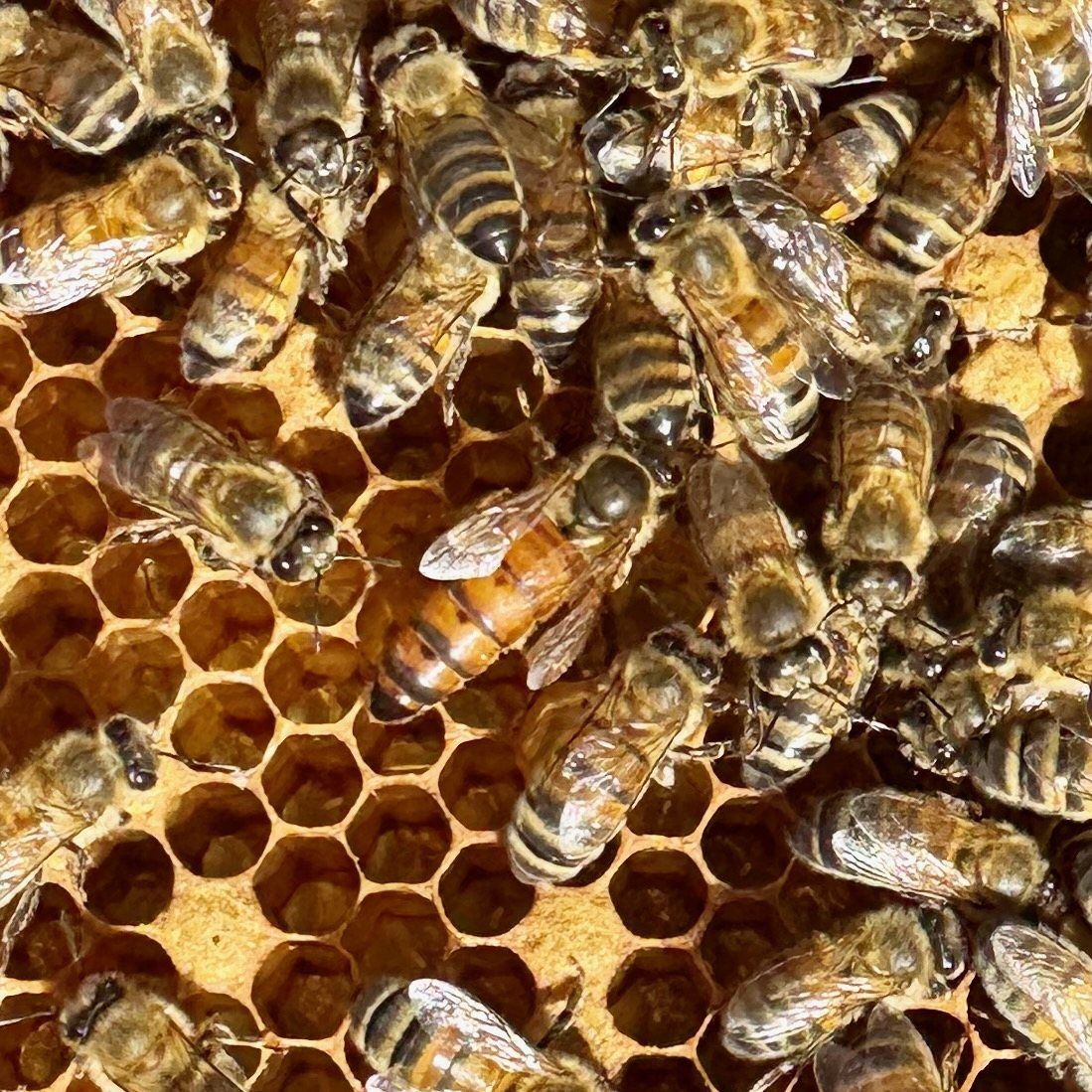
Brood in all stages: eggs, young larvae, older larvae and sealed brood on the same frames. Seeing BIAS tells you a laying queen was present within the last three days, even if you did not spot her. BIBBA’s record card counts the frames with BIAS, a single side counting as half.
How often should I inspect my hives?
Every seven days through swarming season, roughly late April to July in England, a little later in Scotland and the north. If a colony had no charged queen cells at the last inspection, it is unlikely to swarm before the next. With a clipped queen you can stretch the interval to nine or ten days.
How do I score temper on a record card?
BIBBA’s record card uses a 1 to 5 scale: 5 for very calm bees, 4 for more excitable but not stingy, down to 1 for extremely defensive bees that follow you away from the hive. Score each colony at each inspection, in similar weather where you can, and breed from the calmest.
Do I need to record varroa treatments on the hive card?
You can note them here, but the law asks for a separate veterinary medicine record kept for 5 years: purchase, administration, withdrawal period and disposal. Use our veterinary medicine record for that, and keep the mite drop and the treatment date on the hive card so you can judge whether it worked.
Is a paper hive record card better than an app?
Either works if you fill it in every time. Paper cards kept under the roof are always to hand at the hive; an online record is easier to search, filter and back up. This record works on a phone at the apiary, stays on your device, and prints to a tidy card when you want paper.
Sources
- Handling and examining a colony of bees (Best Practice Guideline No. 2), Animal and Plant Health Agency, National Bee Unit
- Notes to accompany the record card (2025), Bee Improvement and Bee Breeders’ Association (BIBBA)
- Technical Data Sheet 11: hive record card, Scottish Beekeepers Association
- Bee medicines availability in the UK, Veterinary Medicines Directorate, GOV.UK
- Irregular inspections and swarm prevention, The Apiarist
Online logbooks
Veterinary medicine record for bees
Keep the bee medicine record the VMD requires: purchases, treatments, withdrawal periods and disposal, kept for 5 years, in your browser, with print and export.
Open the toolHoney extraction and batch record
Lot marks, extraction dates, moisture, jars and best before dates: a honey house record that traces every jar back to its supers and its hives.
Open the tool