Health benefits of honey: what the evidence shows for coughs, wounds, sugar and diabetes
Health benefits of honey explained: what NICE, the NHS and Cochrane say about coughs, wounds and manuka, plus sugar, calories, diabetes and babies under 1.
Honey has a few proven health benefits, fewer than its reputation suggests. Good evidence shows it modestly eases acute coughs in children over 1 and in adults, which is why NICE lists it as a self-care option, and sterile medical-grade honey helps some burns and wounds heal. Beyond that, honey is a sugar: the NHS counts it as a free sugar, it is barely kinder to your blood glucose than table sugar, and it must never be given to babies under 12 months.
What are the proven health benefits of honey?
Here is the state of the evidence at a glance. “Strength of evidence” describes how solid the studies are, not how big the effect is.
| Use | What studies show | Strength of evidence | In practice |
|---|---|---|---|
| Acute cough in children over 1 | Slightly less frequent, less severe night-time cough than placebo | Moderate (Cochrane 2018) | 1/2 to 2 teaspoons at bedtime is reasonable |
| Coughs and colds in adults | Less frequent and less severe cough than “usual care” | Low to moderate (Oxford meta-analysis 2021) | A comfort measure; listed by NICE for self-care |
| Superficial burns | Healed about 4 to 5 days faster than with conventional dressings | High for healing time (Cochrane 2015) | Medical-grade honey only, with professional advice |
| Infected wounds after surgery | Healed more often than with antiseptic and gauze | Moderate, one trial | As above |
| Leg ulcers and other wounds | Unclear effect | Low | No recommendation |
| Blood glucose and cholesterol | Small improvements when honey replaces other sugars | Low (Nutrition Reviews 2023) | Not a reason to eat more |
| Immunity, “detox”, energy, sleep | No good human evidence | None | Not an authorised claim for honey |
| Hay fever | No benefit in the one small trial | Very low | Not a substitute for antihistamines |
| Babies under 12 months | Risk of infant botulism | Official NHS advice | Never give honey |
The European Food Information Council (EUFIC) sums it up well: most honey research is done in the laboratory or in animals, the human studies are small, and the evidence for specific health effects is “limited and not conclusive”.
What is honey actually made of?
Mostly sugars and water
Bees make honey from flower nectar or from honeydew, the sugary liquid left on leaves by sap-sucking insects such as aphids. Foragers add enzymes, evaporate the water and leave it to ripen in the comb before the beekeeper takes the surplus at honey harvest time. What ends up in the jar is a very concentrated sugar solution.
EUFIC gives these average values per 100 g, based on eight assorted honeys:
| Component | Per 100 g | What it means |
|---|---|---|
| Fructose | 41.8 g | The main sugar, sweeter than sucrose |
| Glucose | 34.6 g | The sugar that crystallises |
| Water | 17.5 g | Above 20%, honey risks fermenting |
| Protein | 0.4 g | Traces, including bee enzymes |
| Fat | 0 g | None |
| Energy | 288 kcal | About 60 kcal in a 21 g tablespoon |
The remaining 1 to 2% is a mix of organic acids (EUFIC gives an average pH of 3.9, roughly as acidic as orange juice), minerals, traces of vitamins, enzymes, pigments, pollen grains and the aroma compounds that make heather honey taste nothing like oil seed rape honey.
The balance between glucose and fructose varies with the flowers. It explains why spring rape honey sets solid within days while some summer honeys stay runny for months. That is a natural process, not a fault, and we explain it in our guide to crystallised honey.
Vitamins and minerals in token amounts
Honey is often described as “packed with vitamins and minerals”. The quantities say otherwise: EUFIC notes that the vitamins and minerals in honey amount to less than 1% of the recommended daily intake. Potassium is the most abundant mineral, and vitamin C is present only in traces. Darker honeys, such as heather or buckwheat, carry more minerals and phenolic compounds with antioxidant activity than pale honeys, but at the amounts people eat, the contribution to the diet is marginal.
What the law requires: honey, and nothing else
In England, honey is defined and protected by the Honey (England) Regulations 2015, with parallel Honey (Scotland), Honey (Wales) and Honey (Northern Ireland) Regulations made the same year. They define honey as the natural sweet substance produced by Apis mellifera bees from nectar, plant secretions or honeydew, and they set compositional criteria such as:
| Criterion | General limit | Main exceptions |
|---|---|---|
| Fructose plus glucose | At least 60 g/100 g (blossom honey) | At least 45 g/100 g for honeydew honey |
| Sucrose | At most 5 g/100 g | Higher limits for false acacia, lavender, borage and a few others |
| Water | At most 20% | Up to 23% for heather (Calluna) honey |
| HMF (a marker of heating or ageing) | At most 40 mg/kg | 80 mg/kg for declared tropical honeys |
Most importantly, nothing may be added to honey. A jar with syrup in it is not honey. If you want to know how to read origin statements, blends and grades on the jar, see our guide on how to choose honey.
How many calories and how much sugar is in honey?
Weight for weight, honey has slightly fewer calories than sugar because about a sixth of it is water. White sugar is pure sucrose at roughly 400 kcal per 100 g. Honey provides about 288 kcal per 100 g on EUFIC’s figures; other food tables give slightly higher values, around 300 kcal, depending on the honeys analysed.
| Amount | Calories in honey | Calories in white sugar |
|---|---|---|
| 1 level teaspoon | About 20 kcal (7 g) | About 16 kcal (4 g) |
| 1 level tablespoon | About 60 kcal (21 g) | About 48 kcal (12 g) |
| 100 g | About 288 to 300 kcal | About 400 kcal |
Two details matter in everyday use:
- A spoonful of honey weighs more than a spoonful of sugar. Honey is dense, so spoon for spoon it actually carries more calories than sugar.
- Honey can taste sweeter. Fructose is sweeter than sucrose, so some people use a little less. That is the only real way honey helps you cut sugar.
The key point for UK readers is that the NHS counts the sugars in honey as free sugars, the same category as table sugar, syrups and fruit juice, even though they occur naturally. The NHS limits are:
| Age | Maximum free sugars per day | Roughly equivalent in honey |
|---|---|---|
| Adults | 30 g (about 7 sugar cubes) | Just under 2 level tablespoons |
| Children 7 to 10 | 24 g | About 1 1/2 tablespoons |
| Children 4 to 6 | 19 g | About 1 tablespoon |
| Children 2 to 3 | 14 g | Just under 1 tablespoon |
| Children aged 1 | 10 g | About 2 teaspoons |
| Babies under 1 | No sugar should be added | No honey at all |
The honey column is our own estimate, based on honey being about 80% sugars, and assumes no other free sugars that day. One tablespoon of honey stirred into porridge already uses more than half an adult’s daily allowance.
Is honey healthier than sugar?
A glycaemic index only slightly lower
The glycaemic index (GI) compares how quickly a food raises blood glucose against pure glucose. In the international tables published in Diabetes Care in 2008 by Atkinson, Foster-Powell and Brand-Miller, a GI of 55 or less is low and 70 or more is high. Their averages:
| Product | Average GI | Category |
|---|---|---|
| Glucose | 103 | High (reference 100) |
| Sucrose (table sugar) | 65 | Medium |
| Honey (average) | 61 | Medium |
| Fructose | 15 | Low |
The gap between honey and sugar is small. It depends mainly on the fructose share: a fructose-rich honey such as false acacia should score lower than a glucose-rich oil seed rape honey. Either way, honey clearly raises blood glucose.
What the Toronto meta-analysis found
The study most often quoted in honey’s favour is a systematic review from the University of Toronto led by John Sievenpiper, published online in November 2022 in Nutrition Reviews. It pooled 18 controlled trials with 1,105 participants. In those trials, eating honey daily, often for several weeks, was linked to a small fall in fasting blood glucose (about 0.2 mmol/l), total and LDL cholesterol and triglycerides, and a small rise in HDL cholesterol.
Three limits matter:
- the certainty of evidence was low for most outcomes, by the authors’ own grading, with only the HDL rise judged high certainty;
- the benefits were seen mostly with raw honey and with certain single-flower honeys, notably false acacia (Robinia, sold as “acacia”) and clover, while processed honey showed weaker effects;
- honey was eaten “within a healthy dietary pattern”, in the authors’ words, not on top of a sugary diet.
The authors frame the message as a swap. Replacing the sugar in your tea or yoghurt with the same amount of honey may be a slightly better choice. Adding honey to a diet already high in sugar is not.
Can you eat honey if you have diabetes?
Honey is not forbidden if you have type 1 or type 2 diabetes, but it is not a “free” food either. It is about 80% carbohydrate, its GI of around 61 is close to table sugar, and a level tablespoon carries roughly 17 g of sugars.
In practice:
- Count honey as sugar in your carbohydrate total, like jam or a sugar lump, not as an extra.
- Have small amounts with a meal, where fibre, protein and fat slow absorption, rather than on its own or in a drink.
- If you choose a honey, choose by taste, not by health claims. Fructose-rich honeys may have a slightly smaller effect on blood glucose, but the difference is limited.
- Treat a hypo with the fast-acting sugar your plan names, such as glucose tablets or a sugary drink, and ask your diabetes team before relying on honey instead.
- Talk to your GP, practice nurse or dietitian, especially if you take insulin or another medicine that can cause hypos.
The encouraging Toronto results on fasting glucose involved moderate amounts of honey replacing other sugars in an already healthy diet, with low certainty. They do not make honey a treatment for diabetes or a way to prevent it.
Does honey help a cough?
What NICE and the NHS say
This is honey’s best-documented use, and the one UK health bodies endorse. NICE guideline NG120 on acute cough, published in February 2019 to cut unnecessary antibiotic prescribing, lists honey “in people aged over 1 year” among self-care options, alongside the herbal remedy pelargonium and some over-the-counter cough medicines for people aged 12 and over, and is frank that these have only “limited evidence of some benefit”. NICE also reminds clinicians that an acute cough usually “gets better within 3 to 4 weeks without antibiotics”.
The NHS page on coughs takes the same line for home care: hot lemon and honey “can have a similar effect to cough syrup”, it is not suitable for babies under 1 year old, and small children should not be given hot drinks. The NHS adds that the evidence for honey and lemon is limited.
In children over 1: the Cochrane review
The Cochrane review by Oduwole and colleagues, updated in April 2018, pooled trials in children aged 12 months to 18 years with acute cough, usually from a cold:
| Honey compared with | Result | Certainty |
|---|---|---|
| Placebo | Less frequent, less severe and less sleep-disturbing cough; cough about 0.7 days shorter | Moderate |
| No treatment | Less frequent and less severe cough | Moderate |
| Diphenhydramine (an antihistamine) | Small difference in favour of honey | Low |
| Dextromethorphan (a cough suppressant) | No clear difference | Low |
| Salbutamol | Cough about 0.5 days shorter | Moderate |
The effect is real but modest. Commenting on the review in Paediatrics & Child Health, Dr Sarah Barker noted that it amounts to an average improvement of about 2 points on a 7-point scale for a single night and that the benefit is probably fairly small. She still called honey “a fairly reasonable option” for children over 1, since over-the-counter cough medicines have not been shown to work in young children, and pointed out that there is usually no need to suppress cough in an otherwise healthy child.
Honey is not completely free of side effects: in the Cochrane review, side effects such as tummy ache, nausea and vomiting were reported in about 21 in 100 children given honey against 11 in 100 given a placebo (moderate certainty).
In adults: the Oxford meta-analysis
In 2021 a team from the University of Oxford’s Nuffield Department of Primary Care Health Sciences published a meta-analysis of 14 studies in BMJ Evidence-Based Medicine on upper respiratory tract infections such as colds. Compared with usual care, honey reduced cough frequency and severity and improved a combined symptom score.
The authors presented honey as a cheap alternative to antibiotics, which are often wrongly prescribed for these viral infections. They also acknowledged a moderate risk of bias, very different “usual care” between studies, and only two placebo-controlled studies, which showed no significant difference. They called for better trials.
How to use honey for a cough
In the paediatric trials, doses ranged from about half a teaspoon to two teaspoons at bedtime, according to Dr Barker, who stresses that the best dose is not known. As a rough guide:
| Age | Suggested amount | When |
|---|---|---|
| Under 12 months | No honey, ever | |
| 1 to 5 years | Half a teaspoon | At bedtime |
| 6 to 11 years | One teaspoon | At bedtime |
| 12 years and adults | One to two teaspoons | At bedtime, or in a warm (not hot) drink |
Take it straight from the spoon or stirred into warm water with lemon. Brush teeth, or at least rinse with water, afterwards so sugar does not sit on the teeth all night.
Honey eases the symptom; it does not cure the cause. Following the NHS, see a GP if a cough lasts more than 3 weeks, if you are losing weight for no reason or if your immune system is weakened. Ask for an urgent GP appointment or get help from NHS 111 if the cough is very bad or getting worse quickly, if you feel very unwell, have chest pain, find it hard to breathe or are coughing up blood. Call 999 in an emergency, such as severe difficulty breathing.
Honey for wounds and burns: what about medical honey?
Why honey slows bacteria
EUFIC attributes honey’s antibacterial effect to three factors: its low water content, which draws water out of microbes; its acidity; and hydrogen peroxide, produced by a bee enzyme when honey is diluted by wound fluid. Some honeys, manuka above all, have extra compounds of their own.
What the Cochrane review concluded
The Cochrane review by Jull and colleagues, published in March 2015, analysed 26 trials with 3,011 participants. Its conclusions are mixed:
- superficial (partial-thickness) burns: honey healed them about 4.7 days faster than conventional dressings, across two trials and 992 patients, with high-quality evidence for this outcome; against silver sulfadiazine cream, healing at six weeks was similar, with fewer side effects;
- infected wounds after surgery: more healed with honey than with antiseptic washes and gauze, in a single trial of 50 patients, with moderate-quality evidence;
- venous leg ulcers: the effect of honey was unclear (two trials, 476 patients, low-quality evidence);
- other acute and chronic wounds: low or very low quality evidence, too weak to guide decisions.
The authors themselves say it is difficult to draw overall conclusions about topical honey.
Medical honey and kitchen honey are different products
The trials used honey prepared for medical use. In UK pharmacies and hospitals, these come as gels and impregnated dressings, sterilised and sold as medical devices. Kitchen honey is not sterile and can contain bacterial spores, pollen and wax.
On a small clean graze in a healthy adult, a dab of honey is unlikely to do harm, but it has not been studied. For a burn larger than a small area, a deep or dirty wound, a bite, a wound that is oozing or turning red, or any wound in someone with diabetes, ask a pharmacist, practice nurse or GP. They can suggest a medical honey dressing if it is appropriate.
Is manuka honey worth the money?
Manuka honey comes from New Zealand and Australia, from the flowers of Leptospermum scoparium. What sets it apart is chemistry: it contains high levels of methylglyoxal (MGO), which forms in the honey from a nectar compound called dihydroxyacetone.
In 2008 Thomas Henle’s group at the Technical University of Dresden (Mavric and colleagues) identified MGO as manuka’s main antibacterial compound. In six New Zealand manuka honeys they measured 38 to 761 mg/kg, up to 100 times more than in ordinary honeys. In 2009 Atrott and Henle tested 61 samples containing 189 to 835 mg/kg and found a linear relationship between MGO content and antibacterial activity, concluding that above about 150 mg/kg MGO is directly responsible for manuka’s distinctive activity.
New Zealand’s Ministry for Primary Industries (MPI) has its own scientific definition of monofloral and multifloral manuka, based on chemical and DNA markers, and requires honey exported as manuka to be tested by a recognised laboratory. The numbers on UK jars are industry grades: MGO gives methylglyoxal in mg/kg, while UMF is a trade association scheme.
| Question | Answer |
|---|---|
| Is the antibacterial activity real? | Yes, in the laboratory, which is why it is used in sterile wound dressings |
| Does eating manuka prevent infections? | No good human study shows it |
| What does “MGO 400+” mean? | At least about 400 mg of methylglyoxal per kilo, as stated by the seller |
| Should I buy it for a cough? | The cough trials mostly used other honeys; there is no evidence it works better |
| Is it safer for babies? | No. The botulism risk applies to every honey |
Manuka is expensive and much counterfeited. If you buy it, rely on New Zealand origin and a measured MGO or UMF grade, not on health promises, which sellers may not make on UK food labels anyway. For eating, a jar of British heather, borage, clover or lime honey from a local beekeeper offers more flavour per pound spent.
Why can’t babies under 1 have honey?
This is the one absolute warning in this article. Never give honey to a baby under 12 months: not on a spoon, not in a bottle, not on a dummy or finger to soothe crying or colic. The NHS weaning advice is clear that honey should not be given before 12 months, and that applies to all honey, including local, raw, organic and manuka.
Infant botulism
Honey can contain spores of Clostridium botulinum, a bacterium found in soil and dust that bees can carry back to the hive. In older children and adults, the spores pass through the gut harmlessly. In a baby, whose gut bacteria are not yet established, they can germinate and release botulinum toxin in the intestine.
Symptoms build up gradually:
- constipation, often the first sign;
- poor feeding, a weak cry and floppiness;
- a less expressive face and drooping eyelids;
- loss of head control;
- in severe cases, weakness of the breathing muscles, which needs emergency hospital care.
If a baby shows these signs, call 999 or go to A&E.
How common is it in the UK?
It is very rare. A Health Protection Report published in January 2014 by Public Health England, now the UK Health Security Agency, counted 17 cases of infant botulism in the UK since the first in 1978, 11 of them since 2007. In one of the two 2013 cases the baby had been given honey, although the bacterium was not found in the honey left in the jar, and the report repeats that honey is a known dietary risk for infants under one.
Ordinary cooking does not reliably destroy the spores, so avoid home-made foods sweetened with honey for babies too. From 12 months, a child’s gut is mature enough that this specific risk falls away. Honey then becomes just another free sugar, and the NHS limit for a one-year-old is only 10 g of free sugars a day.
Local honey, raw honey and honey at bedtime: your everyday questions
Does local honey help hay fever?
The theory is that eating local pollen in honey desensitises you. The evidence does not support it. Most UK hay fever is caused by wind-borne grass, tree and weed pollen, while bees mostly collect pollen from insect-pollinated flowers, so little of the relevant pollen reaches the jar. The Asthma and Allergy Foundation of America points to a small 2002 University of Connecticut trial in which people eating local honey, commercial honey or a placebo reported no difference in symptoms. Enjoy local honey for its taste and to support local beekeepers, and use the hay fever treatments a pharmacist recommends.
Does honey help you sleep?
No good study shows that honey improves sleep in healthy people. The only night-time benefit found was for coughing: in the children’s trials, honey given at bedtime slightly reduced the disruption of sleep caused by the cough. A spoonful in a bedtime herbal tea is a pleasure, not a sleeping aid. Brush your teeth afterwards.
Does hot water destroy the goodness in honey?
Heat breaks down some of honey’s enzymes and delicate compounds and raises its HMF, the molecule the honey regulations cap at 40 mg/kg to flag overheated or old honey. In the Toronto review, processed honey showed weaker effects than raw honey. The simplest habit is to let tea or hot water cool for a few minutes before stirring in the honey. Its sugars and calories do not change.
Can honey cause allergies?
Rarely, but yes. Honey contains traces of pollen and bee proteins, and sometimes propolis. People with severe pollen allergies, bee sting allergy or propolis allergy should be cautious and ask their GP or allergy clinic. The same caution applies even more to royal jelly, which has caused severe reactions in people with asthma or allergies.
Is raw or organic honey healthier?
Raw honey, meaning not heated or finely filtered, keeps more of its enzymes, aroma and pollen. That is a genuine quality and flavour point, and the Toronto review hints it may matter for metabolic effects. Organic certification covers how the apiary is run, including forage within a set radius and the treatments used. Neither turns honey into a medicine. Floral source matters most for taste: see which plants for bees give which honeys, or browse our honeys section.
What can a honey label legally claim in the UK?
In Great Britain, nutrition and health claims on food are governed by assimilated Regulation (EC) No 1924/2006, the EU regulation kept in UK law after Brexit. Only claims on the Great Britain nutrition and health claims register, kept by the Department of Health and Social Care and applying to England, Scotland and Wales, may be used, and the register lists rejected claims as well as authorised ones. In Northern Ireland, the EU regulation and EU register still apply under the Windsor Framework.
The authorised claims are tied to specific nutrients or substances and conditions of use, and honey does not contain vitamins or minerals in amounts large enough to qualify for them. Claims that a food prevents, treats or cures a disease are not allowed on any food. In practice a jar of honey sold in the UK should not say that it:
- “boosts immunity” or “fights colds”;
- “heals ulcers” or is “antibacterial” or “antiseptic”;
- “detoxes” or “cleanses” the body;
- relieves hay fever.
A beekeeper can, however, describe the honey honestly: its floral and geographical origin, taste, colour, texture and how it was harvested. If a seller promises medical effects, treat it as a warning sign about the seller, not as a mark of quality. Your local Trading Standards service is the body to tell about misleading labels.
Using honey well, in short
- Enjoy honey as a treat, swapping it for other sugars rather than adding it, and keep within the NHS free sugars limit.
- Try it for coughs in anyone over 1, at bedtime, knowing the effect is modest.
- Leave wounds to medical honey and professional advice.
- Count it as sugar if you have diabetes or are watching your weight.
- Never give it to a baby under 12 months.
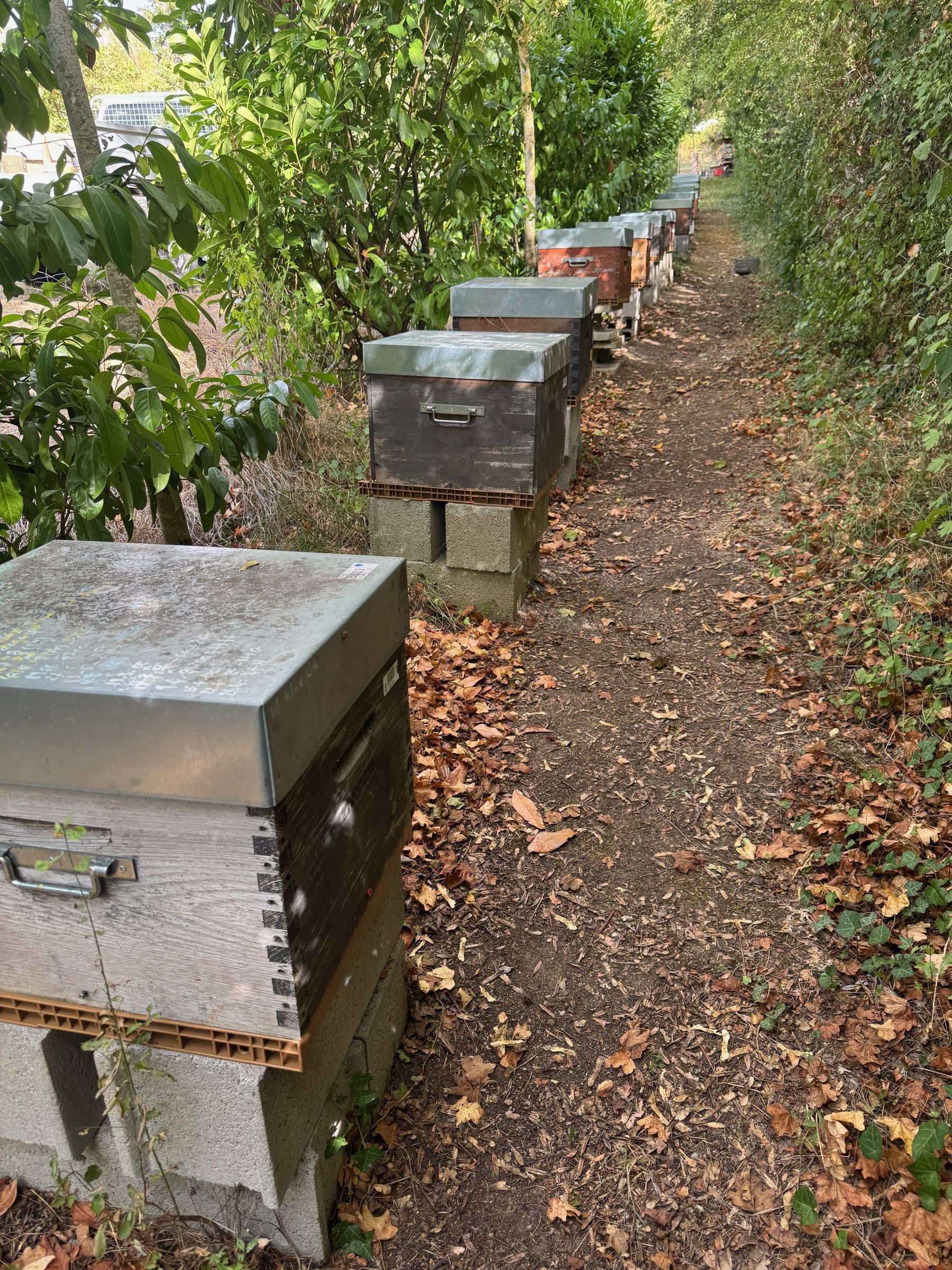
- Buy genuine, clearly labelled honey, ideally from a beekeeper who can tell you where the hives stand.
Frequently asked questions
Is honey healthier than sugar?
Only slightly. Honey is about 80% sugars, and the NHS counts it as a free sugar, exactly like table sugar and syrups. Its average glycaemic index of 61 is close to sucrose at 65. The small benefits seen in trials appeared when honey replaced other sugars in a healthy diet, not when it was added on top, so swapping is reasonable but eating more is not.
Does honey really help a cough?
A little, and NICE accepts it. Its 2019 guideline on acute cough lists honey as a self-care option for people aged over 1 year, while noting there is only limited evidence of some benefit. A Cochrane review found honey probably eases children's coughs slightly better than a placebo or no treatment. It soothes the symptom but does not cure the cold, and coughs usually clear within 3 to 4 weeks.
Why can't babies under 1 have honey?
Honey can contain spores of Clostridium botulinum. In a baby's immature gut these spores can grow and release the toxin that causes infant botulism, which can weaken the muscles used for feeding and breathing. The NHS advises no honey before 12 months, whatever the type. The disease is rare in the UK, with 17 cases reported between 1978 and 2013, but it is serious.
How many calories are in a teaspoon of honey?
Around 20 calories. Honey provides roughly 290 to 300 kcal per 100 g depending on the sample, so a level teaspoon of about 7 g gives some 20 kcal and a tablespoon of about 21 g gives around 60 kcal. Weight for weight it has fewer calories than sugar because it contains water, but a spoonful of honey weighs more than a spoonful of sugar, so spoon for spoon it has more.
Can I eat honey if I have diabetes?
Yes, in small amounts, but count it as sugar. Honey raises blood glucose almost as much as table sugar and a tablespoon carries about 17 g of sugars. Take it with a meal rather than on its own and swap it for other sweet foods rather than adding it. If you treat hypos, use the fast-acting sugar in the plan your diabetes team gave you. Ask your GP, nurse or dietitian if you are unsure.
Is manuka honey better for you than ordinary honey?
In a test tube, yes: manuka contains methylglyoxal, an antibacterial compound found at far higher levels than in other honeys, which is why sterile manuka dressings are used on some wounds. Eating it is another matter. No good human trial shows that a spoonful of manuka protects against infections or soothes a cough better than a British clover or heather honey.
Does local honey help with hay fever?
There is no good evidence that it does. Most hay fever in the UK is caused by grass, tree and weed pollen carried by the wind, while bees mainly collect pollen from insect-pollinated flowers, so very little of the relevant pollen ends up in honey. In a small University of Connecticut trial published in 2002, neither local nor commercial honey relieved symptoms better than a placebo.
Can I put honey from the cupboard on a cut or burn?
Not as a treatment. The trials showing faster healing of superficial burns used medical-grade honey, sterilised and sold as wound dressings. Kitchen honey is not sterile. For a small clean scratch it is unlikely to do harm, but for any burn larger than a small area, a deep or dirty wound, an animal bite or any wound in a person with diabetes, ask a pharmacist, nurse or GP.
Sources
- Cough (acute): antimicrobial prescribing, NICE guideline NG120, recommendations, National Institute for Health and Care Excellence (NICE)
- Cough, NHS
- Sugar: the facts, NHS
- Foods to avoid giving babies and young children, NHS Start for Life
- Infant botulism caused by an unusual dual toxin-producing C. botulinum strain (Health Protection Report 8(1), January 2014), Public Health England (now UK Health Security Agency)
- Great Britain nutrition and health claims (NHC) register, Department of Health and Social Care, GOV.UK
- The Honey (England) Regulations 2015, Schedule 1: reserved descriptions and compositional criteria, legislation.gov.uk
- Honey for acute cough in children (Cochrane Database of Systematic Reviews, 2018), Oduwole O, Udoh EE, Oyo-Ita A, Meremikwu MM, Cochrane Library
- Effectiveness of honey for symptomatic relief in upper respiratory tract infections: a systematic review and meta-analysis (BMJ Evidence-Based Medicine, 2021), Abuelgasim H, Albury C, Lee J, BMJ
- Honey better than usual care for easing respiratory symptoms, especially cough, Nuffield Department of Primary Care Health Sciences, University of Oxford
- Honey for acute cough in children (Paediatrics & Child Health, 2016), Barker SJ, via PubMed Central
- Honey as a topical treatment for wounds (Cochrane, 2015), Jull AB, Cullum N, Dumville JC et al., Cochrane
- International tables of glycemic index and glycemic load values: 2008 (Diabetes Care), Atkinson FS, Foster-Powell K, Brand-Miller JC, via PubMed Central
- Honey and cardiometabolic risk factors: a systematic review and meta-analysis (Nutrition Reviews, 2023), Ahmed A, Tul-Noor Z, Lee D et al., Sievenpiper JL, via PubMed
- The health benefits of honey and its nutritional value, European Food Information Council (EUFIC)
- Identification and quantification of methylglyoxal as the dominant antibacterial constituent of Manuka (Leptospermum scoparium) honeys from New Zealand (Molecular Nutrition & Food Research, 2008), Mavric E, Wittmann S, Barth G, Henle T, via PubMed
- Methylglyoxal in manuka honey: correlation with antibacterial properties (Czech Journal of Food Sciences, 2009), Atrott J, Henle T, Czech Academy of Agricultural Sciences
- Manuka honey testing, Ministry for Primary Industries, New Zealand
- Effect of ingestion of honey on symptoms of rhinoconjunctivitis (Annals of Allergy, Asthma & Immunology, 2002), Rajan TV et al., University of Connecticut Health Center, via PubMed
- AAFA explains: can honey help my seasonal allergies? (April 2022), Asthma and Allergy Foundation of America