How to start beekeeping in the UK: training, rules, costs and your first year
How to start beekeeping in the UK: an association course, BeeBase, your legal duties, the cost of two National hives in 2026 and your first year month by month.
To start beekeeping in the UK you need no licence and no qualification: join your local beekeeping association, take its beginners’ course over the winter, spend a season handling bees with a mentor, then buy two nucleus colonies from a local beekeeper in late spring. Register your apiary free on BeeBase (DataBees in Northern Ireland), learn the diseases you are legally bound to report, and budget around £1,200 to £1,500 for two National hives with bees in 2026.
This guide follows the order a real start takes: learning, choosing how many colonies and what equipment, the legal side, the costs, and then the first twelve months, which is where most new beekeepers lose colonies. Where England, Scotland, Wales and Northern Ireland differ, we say so. Rules quoted are those in force in October 2026.
How do you learn beekeeping in the UK?
Beekeeping is learnt with your hands in the hive, and in the UK that almost always means a local association. Most associations are affiliated to the British Beekeepers Association (BBKA) in England, to the Scottish Beekeepers Association (SBA) in Scotland, to the Welsh Beekeepers Association in Wales, or to the Ulster Beekeepers Association and other groups in Northern Ireland.
The association beginners’ course
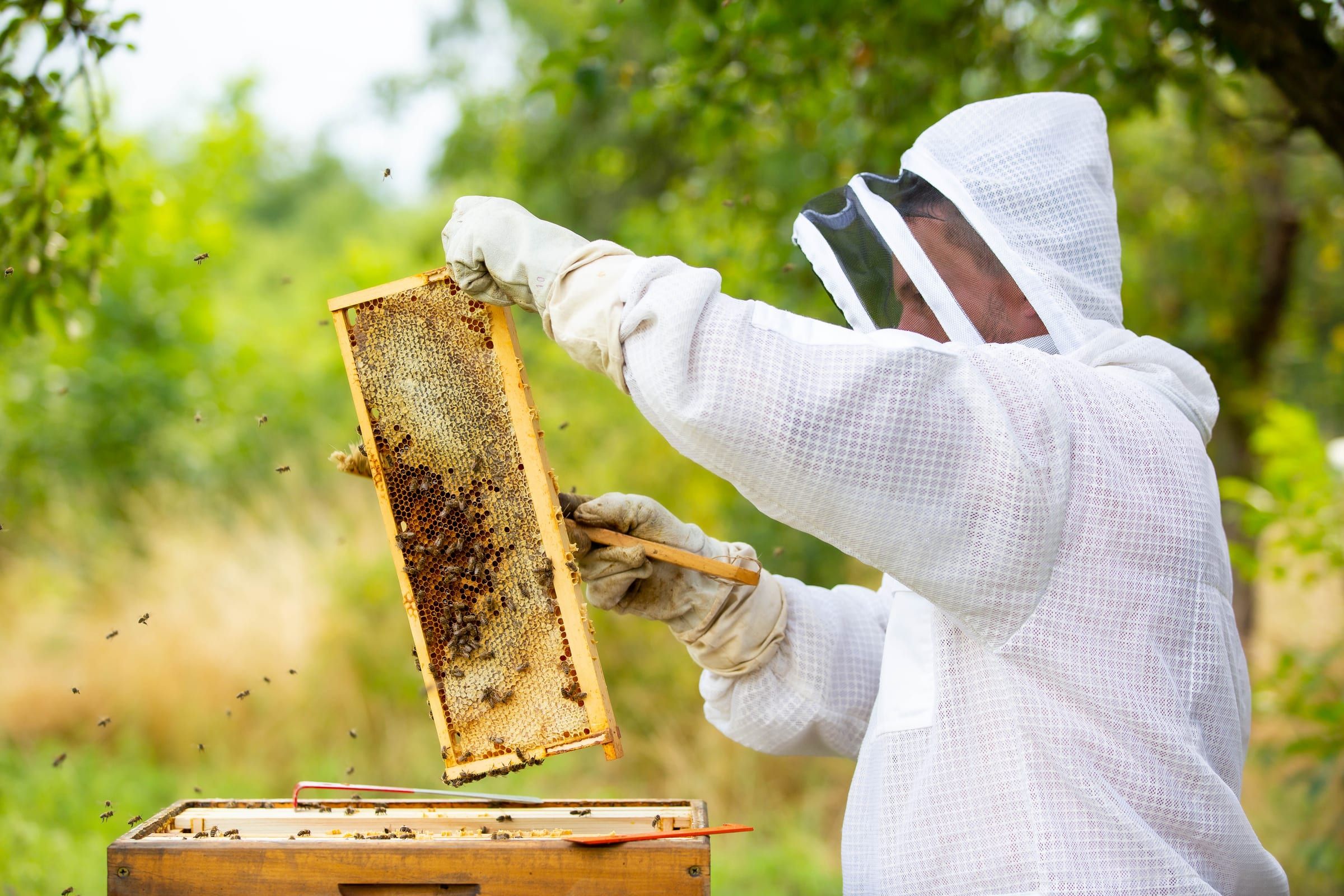
The standard route is a beginners’ course run by your local association between January and March, followed by practical sessions at the association apiary from April. A typical course covers the colony and its castes, the National hive and its parts, handling frames, recognising eggs, larvae and sealed brood, swarm control, the notifiable diseases and Varroa. The practical season is the part that matters: you need to see a colony build up, prepare to swarm and settle into winter before you are left alone with your own.
The BBKA recommends that new beekeepers join a local association rather than its own direct membership. Membership brings mentoring and practical teaching, training meetings, the monthly BBKA News, and £10 million of public and product liability insurance. In Scotland, SRUC’s beginners’ leaflet points new beekeepers towards the SBA, whose membership also includes public liability insurance, and towards a beginners’ course or a local mentor.
What you should be able to do before buying bees:
- Open a colony calmly: light a smoker so it keeps going, puff gently at the entrance and under the crown board, and lift frames without rolling bees.
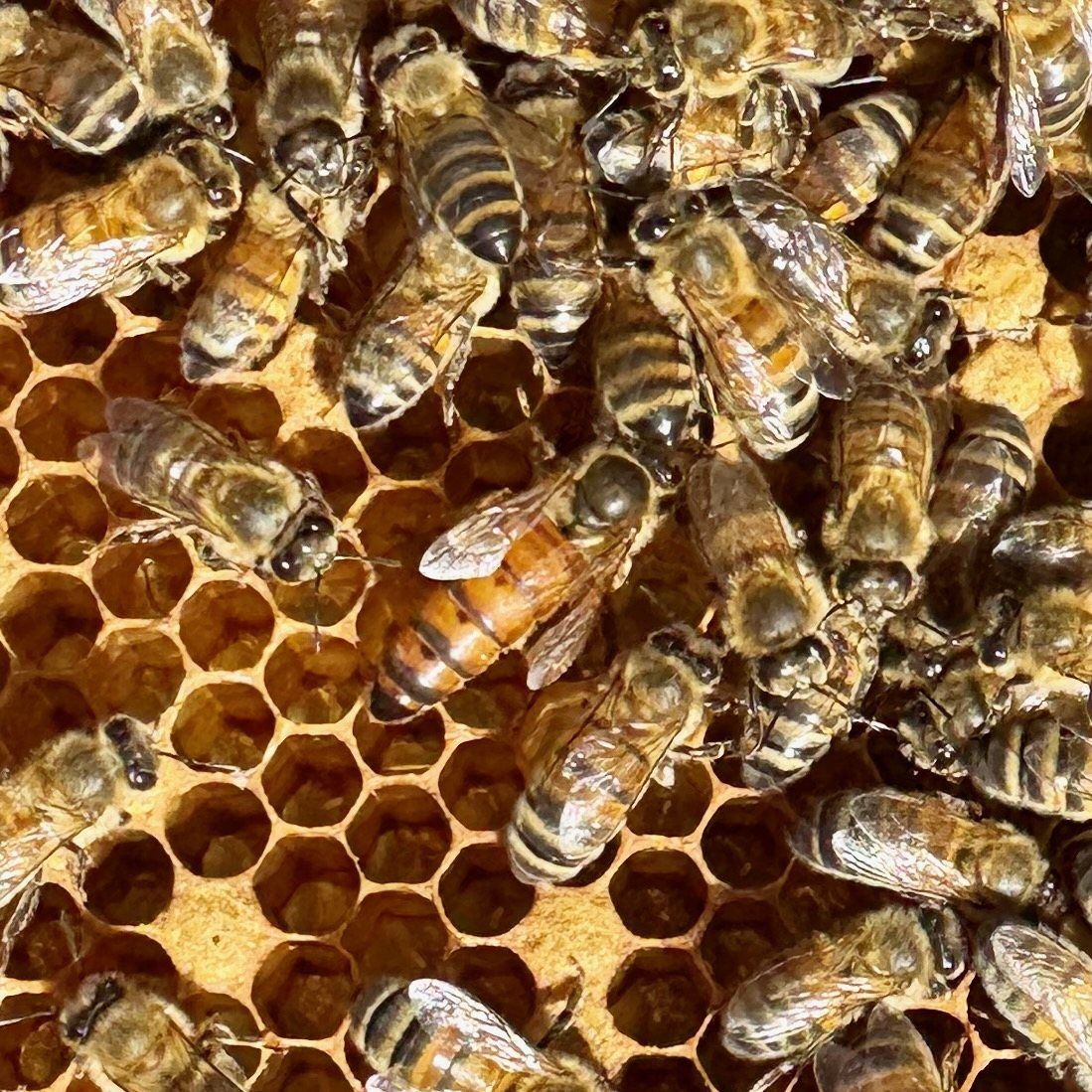
- Read a frame: find eggs (the proof of a laying queen in the last three days), open and sealed brood, pollen, nectar and capped honey. Learn to tell worker, drone and queen cells apart on sight.
- Spot swarm preparations: play cups with eggs or larvae, then charged queen cells, and know which swarm control method you will use before you need it.
- Recognise abnormal brood: sunken, perforated or greasy cappings, discoloured larvae, and know who to call.
- Monitor Varroa with a floor insert or an alcohol wash, and follow a treatment plan with an authorised medicine.
Mentors, books and online courses
A mentor from your association, ideally someone whose apiary is near yours, is worth more than any book: the first time you see a queenless colony or a laying worker, you want someone who can come and look. Online courses and books are useful for theory, and the National Bee Unit (NBU) publishes free Best Practice Guidelines on handling, hygiene, disease recognition, feeding and Varroa that are worth printing before your first season.
The BBKA Basic Assessment and further exams
The BBKA Basic Assessment is the first formal step. To sit it, the BBKA says you should have managed at least one colony of bees for a minimum of 12 months, so most beekeepers take it in their second summer. It is practical, at the hive, arranged through your association’s exam secretary, and covers the basic things the BBKA says every beekeeper should know. After that come the modules and the General Husbandry certificate for those who want to go further. None of these is a legal requirement; they are a way of checking that your skills are sound.
Do you need a licence or registration to keep bees?
No licence, permit or planning consent is needed to keep honey bees in any part of the UK. What you do have is a set of legal duties under the Bee Diseases and Pests Control Orders made under the Bees Act 1980, with separate Orders for England, for Wales and for Scotland, and equivalent rules in Northern Ireland.
BeeBase and DataBees: voluntary but worth doing
Registration is voluntary. In England and Wales, the National Bee Unit, part of the Animal and Plant Health Agency (APHA), runs BeeBase, and an NBU article in BBKA News states plainly that “registration of beekeepers and apiaries is not compulsory”. The Scottish Government also encourages beekeepers in Scotland to register on BeeBase. In Northern Ireland, DAERA runs its own free voluntary register, DataBees.
Registering costs nothing and gets you three things: an email alert when foulbrood is confirmed within 3 km of your apiary, the chance to be included in inspection programmes, and access to a local bee inspector for advice. Joining an association does not register you on BeeBase; it is a separate step. Our guide to how to register your bees walks through it.
Diseases and pests you must report
These obligations apply whether or not you are registered:
| Disease or pest | Status | What you must do |
|---|---|---|
| American foulbrood (AFB) | Notifiable | Report any suspicion immediately; failure to do so is an offence |
| European foulbrood (EFB) | Notifiable | Report any suspicion immediately |
| Small hive beetle (Aethina tumida) | Notifiable, not known to be present in the UK | Report any suspicion immediately |
| Tropilaelaps mites | Notifiable, not known to be present in the UK | Report any suspicion immediately |
| Varroa destructor | Reportable in Great Britain since 21 April 2021 | Report its presence once, through BeeBase or the NBU form |
| Yellow-legged (Asian) hornet | Not notifiable, separate reporting route | Report sightings with a photo through the UKCEH form or the Asian Hornet Watch app |
In England and Wales you report to the NBU or your local bee inspector. In Scotland, the Scottish Government asks you to email its bee health team, and SASA offers a free diagnostic service. If a notifiable disease is found, a standstill notice stops you moving colonies or equipment until it is lifted.
The Varroa rule comes from the 2021 amendment Orders for England, Wales and Scotland. Once you have reported Varroa, the NBU says you only need to contact it again if your apiary’s status changes. Since virtually every colony in Great Britain has Varroa, a new beekeeper should simply assume theirs does.
Medicines: authorised products and five years of records
Only veterinary medicines authorised for honey bees in the UK may be used, and only as the label directs. Using anything else, such as an unauthorised oxalic acid mix, is an offence under the Veterinary Medicines Regulations 2013. You must keep records of every medicine you buy, use and dispose of for at least five years, even if the colony has died. Bee inspectors can ask to see them.
The NBU’s June 2025 list includes Apiguard and Thymovar (thymol), ApiLife Var (thymol and essential oils), Apivar and Apitraz (amitraz), Apistan (tau-fluvalinate), Formic Pro (formic acid), VarroMed (formic and oxalic acid), and several oxalic acid products: Api-Bioxal, Oxybee, Dany’s BienenWohl, Oxuvar and, in Great Britain only, Varroxal. Our guide to Varroa mites explains when and how to use them.
Moving and buying bees
Package bees, nuclei and full colonies cannot be imported into Great Britain from the EU: only queens with attendants are allowed, and every import must be notified through IPAFFS. For a beginner this matters less than it sounds, because the NBU’s advice is to buy local bees anyway, to avoid spreading pests and diseases and because many beekeepers find local strains better suited to local conditions.
How many hives should a beginner start with?
Start with two colonies. Two give you a comparison, so you can see that one colony is slow rather than guessing, and they give you a rescue: if one colony becomes queenless, a frame of eggs and young larvae from the other lets it rear a new queen.
Do not stop at two hives’ worth of equipment, though. Almost every swarm control method used in the UK, the artificial swarm, the nucleus method or a vertical split, needs a spare floor, brood box, crown board, roof and frames. A beginner with two colonies should own the equivalent of three hives by May.
More than three or four colonies in the first year is too many. Each one needs a full inspection every seven to nine days through the swarming season, and the time and money grow faster than the honey.
Which hive should you use?
Most British beekeepers use the National hive, and buying the same type as your association means you can borrow frames, swap brood and buy second-hand kit locally. The standard National takes 11 frames in the brood box, with a brood frame of 14 by 8½ inches. Many beekeepers find a single National brood box too small for a prolific queen, so they run “brood and a half” (a brood box plus a super) or switch to the 14x12, whose deeper frame gives roughly 40% more comb per frame. Our page on the National hive compares these options.
Other hives you will meet: the WBC, the double-walled cottage-garden hive that takes National frames but is heavier to work; the Commercial, with a larger 16 by 10 inch frame, popular with some bigger operations; and the Langstroth, the world standard, less common here. Choose one frame size and stick to it.
Which bees?
Ask your mentor what is kept locally. In much of the UK you will be offered local mongrel bees, Buckfast (the strain developed at Buckfast Abbey in Devon, known for being calm and productive), or Carniolans. In some areas, groups work to conserve the native British dark bee, Apis mellifera mellifera, which copes well with cool, wet summers. For a beginner, temperament matters more than breed: a calm colony you enjoy opening teaches you more than a productive one you dread.
How do you get your first colony?
The safest start is a nucleus colony, usually five or six National frames with a laying queen, brood and stores, bought from a local beekeeper or association in May or June.
What a good nucleus looks like
The NBU’s Best Practice Guideline on obtaining bees sets out what to check. A good nucleus should have:
- a young laying queen, possibly marked or clipped;
- all stages of brood, with no signs of disease, on at least three frames;
- four frames or more fully covered with bees;
- stores equal to at least one full comb of honey and half a frame of pollen;
- clean combs, preferably less than one season old.
Look at the nucleus before you pay, or ask an experienced beekeeper to. If the seller will not let you inspect, the NBU treats that as a warning sign. Ask where the queen came from and keep a record of the purchase.
Order early. Overwintered nuclei sell out over the winter, and good local suppliers often have waiting lists. As one example, a Buckfast National nucleus from a commercial supplier is listed at £340 for 2027, with a £25 deposit. Local association members often sell nuclei for less.
Swarms: free but not for your first colony
A swarm costs nothing and can become a fine colony, but you do not know where it came from, how healthy it is or how it will behave. The NBU advises that swarm collecting is only for those with beekeeping experience, and that swarms of unknown origin go into a separate isolation apiary for about six weeks while you check them for disease. Many associations run a swarm list; once you have a season behind you, ask to go out with someone who collects them. Second-hand hives and frames carry the same caution: scorch wooden boxes and do not use old brood comb of unknown history.
Where should you put your hives?
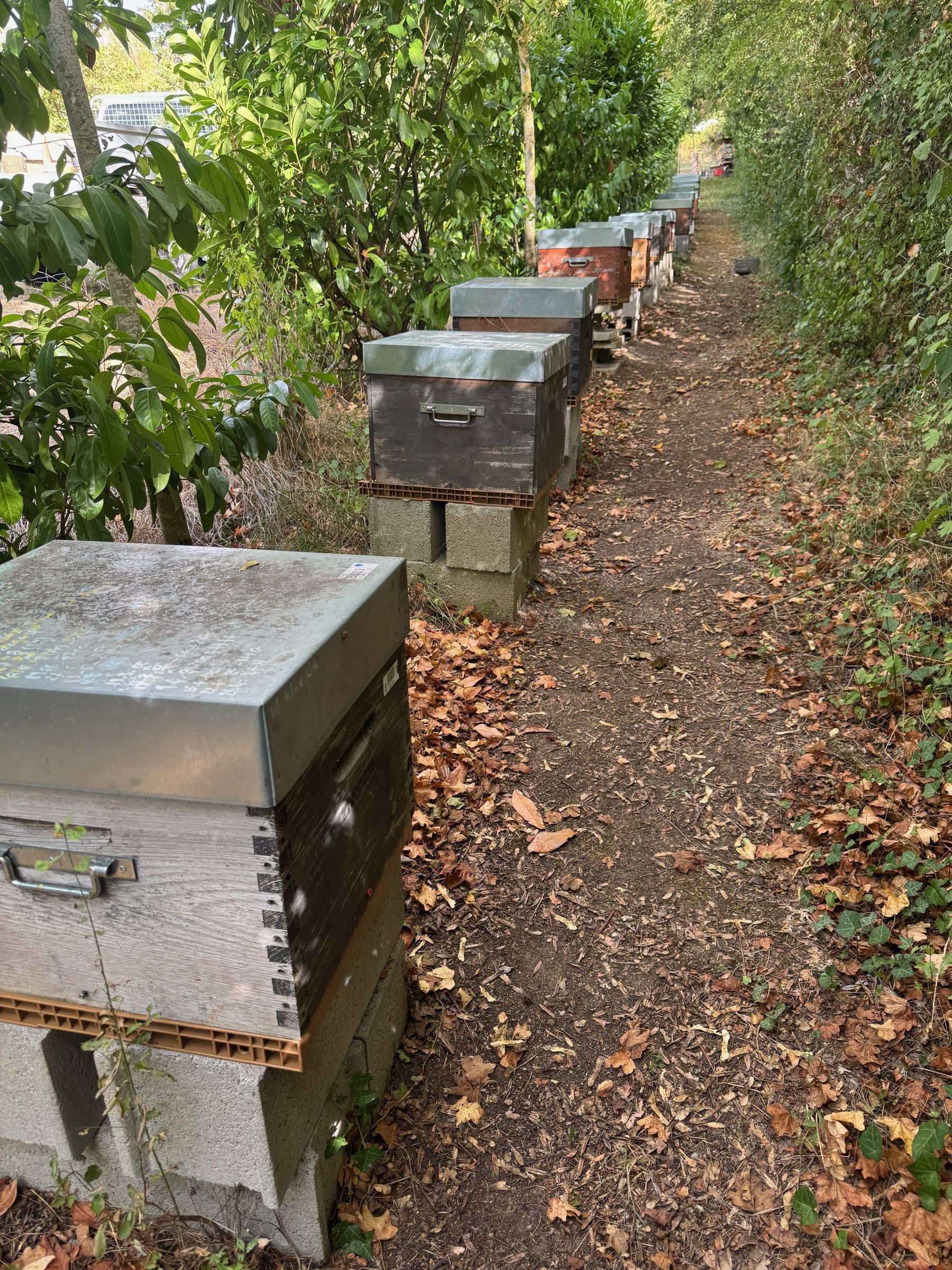
You need a site that is sheltered from the prevailing wind, not in a frost pocket or under dripping trees, dry underfoot, and with forage within about three miles. In gardens, a hedge, fence or netting around 2 metres high in front of the entrance makes the bees fly up and over people’s heads. Face entrances away from paths, washing lines and your neighbours’ patio, and provide water so your bees do not queue at their pond.
There is no national distance rule in the UK, but nuisance law applies, as do tenancy agreements, allotment rules and some council policies. Talk to your neighbours before the bees arrive; a jar of honey in the first summer does a lot of good. Our guide to where to put a beehive covers sites in detail.
How much does it cost to start beekeeping in the UK?
The figures below are indicative 2026 prices for new equipment from UK suppliers. Second-hand kit and association sales can bring them down a lot.
Start-up costs for two colonies
| Item | Indicative price (2026) |
|---|---|
| National hive, cedar, assembled: floor, brood box, 2 supers, crown board, roof | about £225 each (one supplier’s assembled price, without frames) |
| Frames and foundation for brood box and supers | about £50 to £80 per hive |
| Queen excluder | about £10 to £25 per hive |
| Spare hive for swarm control (brood box, floor, crown board, roof, frames) | about £150 to £200 |
| Two nucleus colonies | about £400 to £680 |
| Bee suit or jacket with veil, gloves | about £60 to £150 |
| Smoker and hive tool | about £35 to £60 |
| Feeders, varroa trays, first treatment | about £40 to £80 |
| Total for two colonies | about £1,200 to £1,500 |
An extractor (a two to four-frame manual model) adds roughly £150 to £400, plus settling tanks, strainers and jars. Most associations lend or hire an extractor to members, which lets you put off that cost until you know you are staying with it.
Running costs each year
- Association membership, including the BBKA or SBA insurance cover: check your local association’s fee, which varies across the country.
- Bee Diseases Insurance (England and Wales only), which helps with the cost of replacing equipment destroyed because of a notifiable disease: basic cover from £2 a year for one to three colonies, the BBKA says.
- Varroa treatments: count on two treatments a colony a year for most beekeepers.
- Sugar for autumn feeding, often 10 kg or more a colony in a poor year.
- Frames and foundation to replace old brood comb, about a third of the brood box each year.
- Jars and labels if you sell honey.
How much honey to expect
Do not plan your budget around honey in the first year. A colony started from a nucleus in June spends the summer drawing comb and building up, and you may take little or nothing. In later years, crops vary widely with the weather. The BBKA’s annual honey survey gives an idea of the range: an average crop of 40.25 lb (about 18 kg) in 2019, the best in ten years, against just 8 lb in the wet summer of 2012. British beekeepers still sell most honey in 1 lb (454 g) jars, so a 40 lb crop fills about 40 jars.
Your first year as a beekeeper, month by month
This calendar is for a typical lowland English site. In Scotland, northern England and upland Wales, everything happens two to four weeks later. Our full beekeeping calendar goes into each season.
| Month | What happens in your first year |
|---|---|
| January to March | Beginners’ course; order nuclei; build and paint hives; register on BeeBase |
| April | Association apiary sessions; prepare your site; willow and early fruit blossom |
| May to June | Collect your nuclei; transfer to full hives; feed thin syrup if no flow; weekly checks |
| June | The “June gap” between spring and summer flows; watch stores in new colonies |
| July | Add a super if the brood box is full; late July: monitor Varroa and treat if needed |
| August | Heather on moorland; remove any supers before treating; watch for wasps and robbing |
| September | Feed thick syrup to reach winter weight; reduce entrances; fit mouse guards |
| October to December | Assess autumn treatment; hefting for weight; a winter oxalic acid treatment if needed |
Building up the nucleus
When you collect your nucleus, put it in its final position and transfer the frames into the brood box in the same order the next day, with new frames of foundation either side. If there is no flow on, feed thin syrup so the bees can draw out the new comb. The NBU makes thin syrup from 1 kg of white granulated sugar dissolved in 1,260 ml of warm water. Inspect once a week: you want to see eggs, an expanding brood nest and new comb being drawn.
The main UK nectar flows
Across much of lowland Britain the year looks like this: willow, blackthorn and early fruit in March and April; oil seed rape in April and May, which gives a big crop but sets hard in the comb within days of capping, so extract it promptly; hawthorn and sycamore in May; then the June gap, when spring flowers are over and summer ones not yet out, a time when strong colonies can starve. Summer brings bramble, clover, lime (linden) in July and, in some areas, borage and field beans. Heather on the moors gives a late, thixotropic honey in August that has to be pressed rather than spun. Ivy flowers in September and October and feeds the bees going into winter.
Swarm control in your first year
A colony started from a nucleus in June often will not swarm in its first summer, but a strong one can. From your second spring, swarming is the main event of the season. Inspect every seven to nine days from April to July, because a colony that has sealed queen cells may already have swarmed or will do within days. Decide your method in advance; our guide to swarming explains the artificial swarm step by step.
Varroa through the year
Every colony needs a Varroa plan. The NBU’s Varroa guideline says it is generally recommended to keep populations below 1,000 mites to prevent serious damage, and that around 2,500 mites causes irreversible damage and a significant risk of collapse. Its calendar:
- February and March: get mite levels as low as possible before the colony expands and supers go on.
- Late spring: use monitoring to time husbandry methods such as drone brood removal.
- Late July: monitor and treat if needed, to protect the long-lived winter bees being raised in August and September.
- October: assess how well the autumn treatment worked and decide whether a winter oxalic acid treatment is needed.
Supers must be off before you use most treatments, so plan your last honey harvest around your treatment dates.
Getting the colony through winter
In September, feed thick syrup until each colony has enough stores. The NBU puts winter needs at 18 to 22 kg of stores for a colony, more for a large one, and makes thick syrup from 1 kg of sugar in 630 ml of water. September is the month it suggests for much of the UK, while the bees can still process and cap the syrup. Fit a mouse guard and a reduced entrance, strap or weight roofs against gales, and from then on lift the back of the hive every few weeks to feel its weight. A colony that feels light in late winter can be given fondant over the crown board hole.
Why do beginners lose colonies in their first year?
Four causes account for most first-year losses:
- Varroa and the viruses it spreads. A colony can look strong in August and be gone by February because the winter bees were damaged as pupae. Monitoring and a late-summer treatment are not optional.
- Starvation. It happens in the June gap, in a wet spring and in late winter, when a colony with brood eats fast. Heft your hives and feed when they feel light.
- Queen failure. A queen that disappears or fails can leave a colony with no eggs to rear a replacement. Your second colony is the safety net.
- Swarming with no plan. A colony that swarms twice or three times can be left too weak to build up, and a virgin queen that fails to mate leaves it doomed.
Keep a record card for each colony at every visit: date, temper, eggs seen, frames of brood, stores, queen cells and treatments. It is how you spot a trend, and the treatment section doubles as your legal medicines record.
Selling your honey: the rules in the UK
You do not need a licence to sell honey, but you are running a small food business, and the rules apply from the first jar.
Registering as a food business
The Food Standards Agency’s guidance for England, Wales and Northern Ireland is to register with your local council at least 28 days before you start trading, including when you trade from home. Registration is free and cannot be refused. In Scotland, food business registration also goes through your council, under Food Standards Scotland; the council’s environmental health team will tell you what applies to a small honey seller.
What the label must say
Honey is covered by the Honey (England) Regulations 2015 and the matching Honey (Wales) Regulations 2015, Honey (Scotland) Regulations 2015 and Honey Regulations (Northern Ireland) 2015, alongside general food labelling law. Trading Standards guidance for England and Wales sets out what a jar of prepacked honey must show:
- The name “honey”, a reserved description that can only be used for pure honey with nothing added or removed. Words such as “blossom honey” or “comb honey” are also allowed.
- The country of origin, for example “Origin: UK”. A regional name such as “Sussex Honey” must mean all of it comes from there.
- The net weight in grams or kilograms, normally at least 4 mm high for a standard jar. You may add “1 lb”, but it cannot be more prominent than the metric figure.
- A best before date, ideally with day, month and year. Honey keeps well, so small producers often set a date about two years ahead.
- Your name and address.
- A lot mark, which can be the best before date if it shows at least day and month, or a code starting with “L”.
Many packers also add “Unsuitable for children under 12 months”; this is voluntary in the UK.
Tax on honey sales
If your gross income from honey and any other casual trading is £1,000 or less in a tax year, HMRC’s trading allowance means you do not need to tell HMRC or pay tax on it. Above £1,000, you must register for Self Assessment by 5 October after the end of that tax year. Most hobby beekeepers stay well under the threshold.
Your roadmap for a first season
If you take only one thing from this guide, take the order:
- Autumn: find your local association, join it and book its beginners’ course.
- Winter: take the course, read the NBU Best Practice Guidelines, find a mentor, order two nuclei and choose your hive type.
- Early spring: buy or build two hives plus a spare, prepare your site, register on BeeBase or DataBees.
- April and May: handle bees at the association apiary until opening a hive feels routine.
- May and June: collect your nuclei, transfer them, feed, inspect weekly.
- July and August: monitor Varroa and treat in late July or early August.
- September: feed to winter weight, fit mouse guards.
- Winter: heft, keep your records, plan for swarm control next spring and book the Basic Assessment for your second summer.
You can find more on the first steps in our getting started section.
Frequently asked questions
Do you need a licence to keep bees in the UK?
No. There is no licence, permit or qualification needed to keep honey bees anywhere in the UK. Registering your apiaries is voluntary: on BeeBase in England, Scotland and Wales, and on DataBees in Northern Ireland. What is compulsory is reporting suspected foulbrood, small hive beetle or Tropilaelaps, reporting Varroa in Great Britain, and using only authorised bee medicines with records kept for five years.
How much does it cost to start beekeeping in the UK?
For one National hive with frames, a nucleus of bees, a suit, gloves, smoker and hive tool, budget roughly £700 to £900 in 2026. Two colonies come to around £1,200 to £1,500, mostly because a five-frame nucleus can cost up to £340. An extractor adds £150 to £400, which many beginners avoid by borrowing the one their association lends to members.
How many hives should a beginner start with?
Two colonies is the usual advice from associations and inspectors. With two you can compare their progress, and if one loses its queen you can give it a frame of eggs from the other so it can raise a new one. Make sure you have a third set of boxes ready, because swarm control in May and June almost always needs spare equipment, even with just two colonies.
Is it better to start with a nucleus or a swarm?
Start with a nucleus from a known local beekeeper. The National Bee Unit says a good nucleus has a young laying queen, at least three frames of brood, four or more frames covered with bees and some stores. Swarms are free but their health and temper are unknown, so the NBU advises leaving them to experienced beekeepers and hiving them in an isolation apiary for about six weeks.
When should I take the BBKA Basic Assessment?
The BBKA asks that you have managed at least one colony for a minimum of 12 months before taking the Basic Assessment, so most people take it in their second summer. It is a practical assessment at the hive, arranged through your local association's exam secretary, and it checks the basic handling, disease recognition and swarm control skills every beekeeper should have.
Can I sell honey from my garden hives?
Yes. In England, Wales and Northern Ireland, register free with your council at least 28 days before you start selling. The jar must say honey, show the net weight in grams, a best before date, your name and address, the country of origin (for example Origin: UK) and a lot mark. If honey and other casual trading income stay under £1,000 a year, HMRC's trading allowance means no tax or Self Assessment.
How much time does beekeeping take each week?
From April to July you should open each colony every seven to nine days to check for queen cells, which takes 15 to 30 minutes a hive for a beginner. Add travel, cleaning and swarm control, and two hives need about two hours a week in season. From November to February there is very little to do beyond hefting hives for weight and checking roofs after storms.
Are some places in the UK harder for beekeeping?
Yes. Wet, cool summers in the north and west of Scotland, Wales and upland England mean fewer flying days and smaller crops, so local bees and careful feeding matter more. Areas with lots of oil seed rape give a big spring crop that sets fast, while heather moorland gives a late August crop. Ask your local association what the main flows are where you live.
Sources
- Honey bees: protecting them from pests and diseases, Defra and Animal and Plant Health Agency, GOV.UK
- Legal responsibility of beekeepers, National Bee Unit, APHA
- Report Varroa, National Bee Unit, APHA
- Why sign up to BeeBase? (BBKA News, July 2021), National Bee Unit, APHA
- Best Practice Guideline No. 5: Advice for obtaining honey bees, National Bee Unit, APHA
- Best Practice Guideline No. 7a: Feeding bees, sugar, National Bee Unit, APHA
- Best Practice Guideline No. 11: Varroa, National Bee Unit, APHA
- Bee medicines: products authorised in the UK (June 2025), National Bee Unit, APHA
- Honey bee health: guidance, Scottish Government
- Beekeepers voluntary registration (DataBees), Department of Agriculture, Environment and Rural Affairs (DAERA)
- Beekeeping for beginners, SRUC (Scotland's Rural College)
- Honey: labelling and composition guidance for England and Wales, Business Companion, Chartered Trading Standards Institute
- Starting a food business, Food Standards Agency, GOV.UK
- Tax-free allowances on property and trading income, HM Revenue and Customs, GOV.UK
- Basic Assessment, British Beekeepers Association
- Become a member of the BBKA, British Beekeepers Association
- Insurance, British Beekeepers Association
- More than 40% of beekeepers say they had a better honey harvest in 2019, British Beekeepers Association
- National hive with flat roof, cedar, assembled (price), Abelo
- 2026 nucs and queens (price list), Hagen's Bees