Winterizing beehives: stores, moisture, wraps and entrances by US climate zone
Winterizing beehives in the US: honey stores by region, mite control, upper entrance, moisture quilt, wraps, mouse guards, candy boards and indoor wintering.
Winterizing beehives means getting a colony through the months when it cannot forage: a healthy queen and enough young bees, low varroa mite counts, 40 to 90 lb (18 to 41 kg) of honey depending on your climate, protection from wind and mice, and a way for moisture to leave the hive. In the northern US most of that work is done between August and October, and the wraps, moisture boards and mouse guards that people picture are the last step. In the Deep South winterizing is lighter: colonies keep some brood all winter and the risk is starvation and mites rather than cold. This guide gives the steps for a 10-frame Langstroth hive, adjusted by region and USDA hardiness zone, following land-grant extension advice from Cornell, the University of Minnesota, Penn State, the University of Florida, NC State and others.
How do honey bees survive winter?
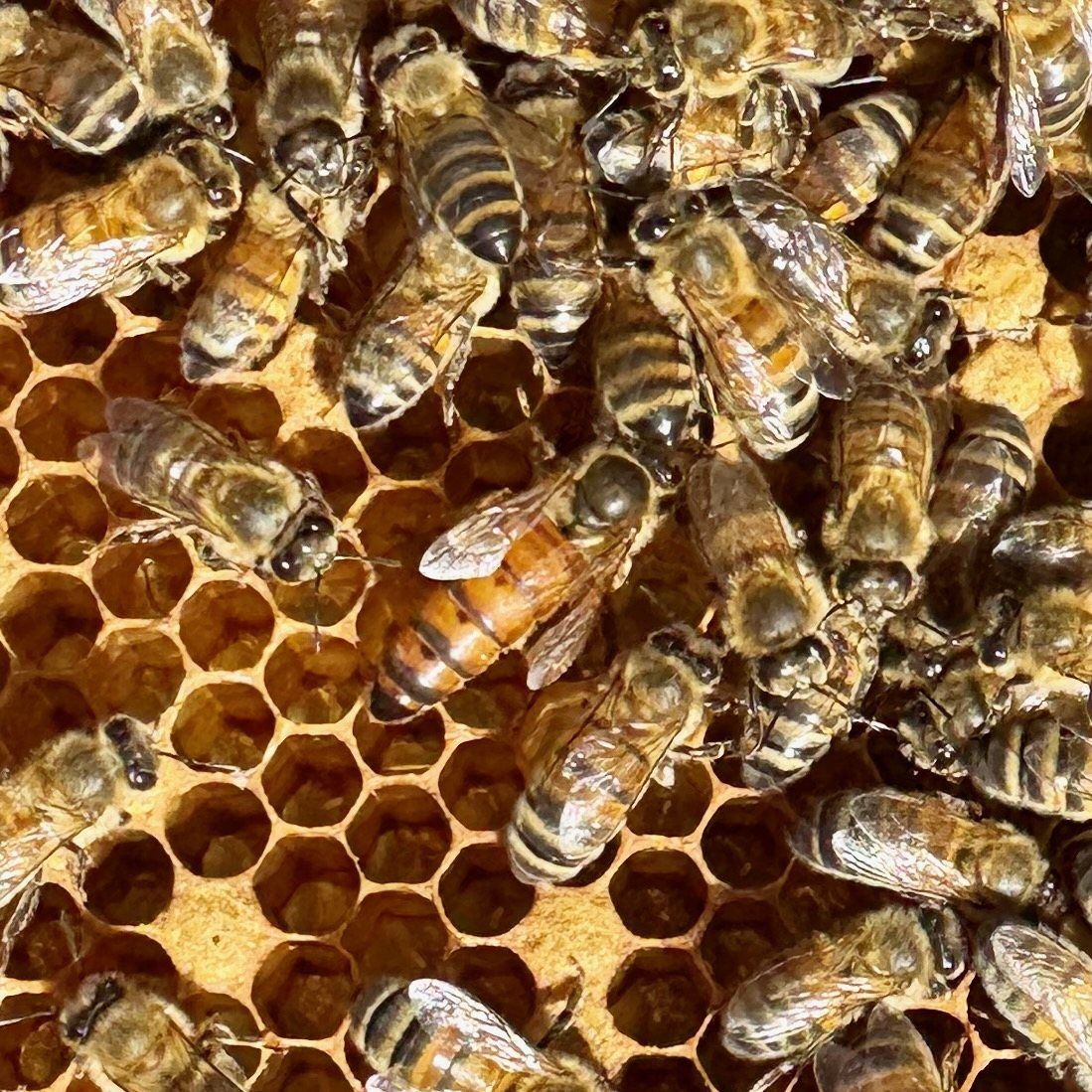
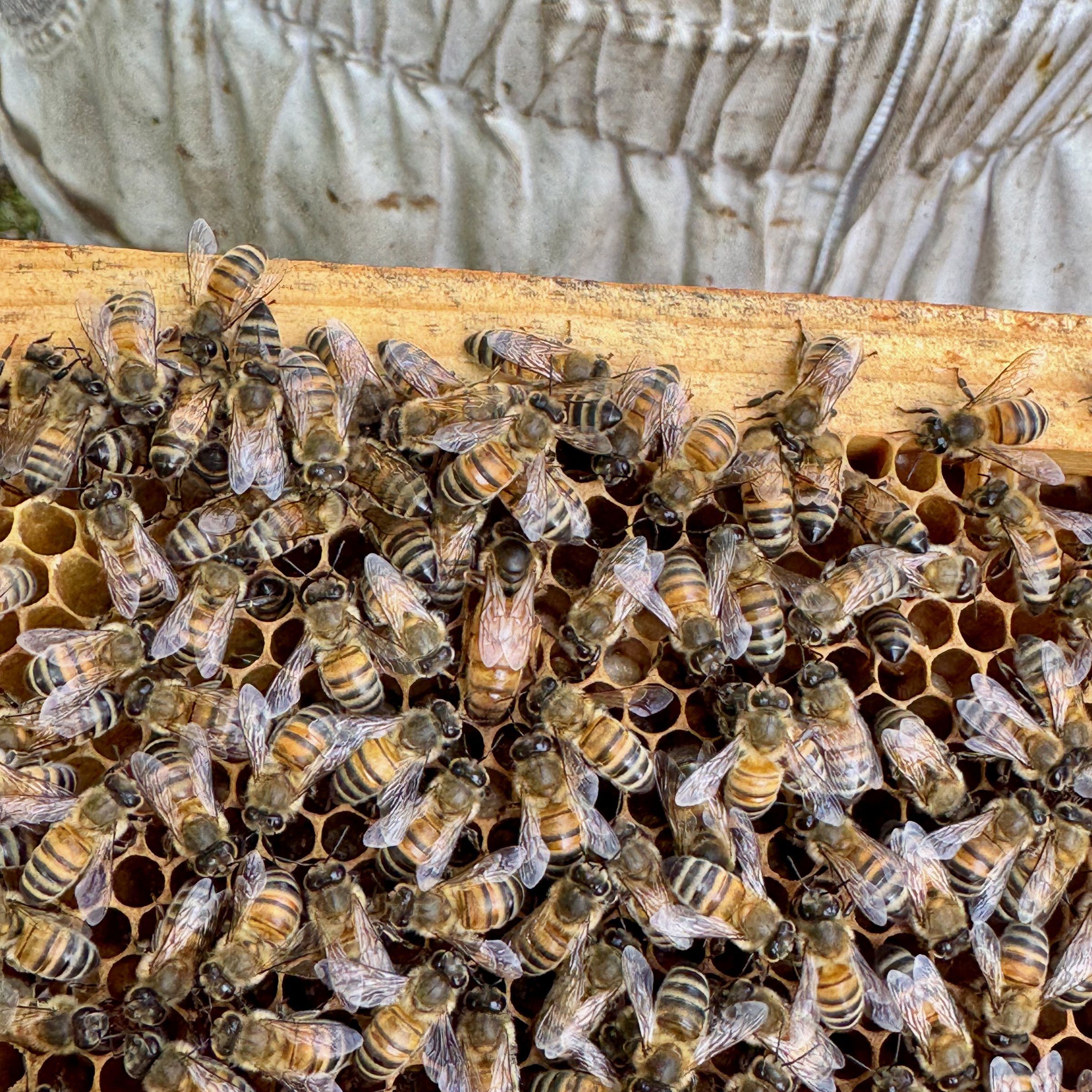
Honey bees do not hibernate. When temperatures fall, the colony forms a cluster on the combs and the bees produce heat by shivering their flight muscles. The University of Florida’s guide to overwintering in northern climates puts the center of the cluster at about 95°F (35°C) while brood is present; NC State Extension notes that bees cluster once evenings fall below 50°F (10°C). The cluster heats itself, not the hive. Cornell’s overwintering guide stresses this point: a draft through the hive can drain the cluster’s heat and kill the colony.
The bees that make up the winter cluster are a different generation from summer workers. Penn State’s seasonal guide (Grozinger and Anton) gives summer bees a lifespan of about six weeks and winter bees up to about six months, and places their rearing in August and September in the Northeast. A review by Döke, Frazier and Grozinger in Current Opinion in Insect Science (2015) links high winter losses to varroa parasitism, viruses, location and bee genetics, and treats overwintering as a physiological state that starts in late summer.
That is why winter preparation begins in August. A colony that raises its winter bees while carrying a heavy mite load enters winter with short-lived, virus-infected bees, whatever insulation you add in November. The U.S. Beekeeping Survey, led by Auburn University with Oregon State University and the Apiary Inspectors of America, recorded winter losses of 30.3% in 2025-26 and annual losses of 39.9%, after a record annual loss of 55.6% in 2024-25.
When should you winterize? Timing by region and hardiness zone
The USDA Plant Hardiness Zone Map, updated in November 2023, divides the country into 13 zones by average annual extreme minimum winter temperature, using weather station data from 1991 to 2020. Each zone spans 10°F and is split into “a” and “b” half-zones of 5°F. About half the country moved to the next warmer half-zone compared with the 2012 map. The zones were drawn for plants, not bees, but they are a practical shorthand for how hard your winter will be. Find yours at planthardiness.ars.usda.gov.
| Zone (extreme low) | Typical areas | Winter for the colony | Main winterizing work |
|---|---|---|---|
| 3 to 4 (-40 to -20°F) | Minnesota, North Dakota, northern Wisconsin, northern Maine | Clustered from November to March, few flying days | Three deeps or heavy two deeps, full wrap, upper entrance, moisture board; or indoor storage |
| 5 to 6 (-20 to 0°F) | Upstate New York, Pennsylvania, Ohio, Michigan, much of the Mountain West | Long cluster with mild spells | 80 lb of honey, upper entrance, absorbent top, light wrap or roofing paper |
| 7 to 8 (0 to 20°F) | Virginia, the Carolinas, Tennessee, much of Georgia and Alabama, Pacific Northwest | Short cold spells, bees fly on many days | 40 to 60 lb of stores, reduced entrance, mouse guard, feed light colonies |
| 9 to 10 (20 to 40°F) | Florida, Gulf Coast, coastal and Central Valley California | Brood rearing rarely stops | Stores checks every month, mite control with brood present, robbing control |
In practice the calendar runs like this in the North:
- August: test for mites and treat promptly, as soon as the honey is off.
- Early September: assess honey stores; combine weak colonies.
- September: feed 2:1 syrup to light colonies; recheck mites.
- October: remove queen excluders and empty supers, fit mouse guards and entrance reducers, strap lids.
- November: wraps and moisture boards; in Minnesota the University of Minnesota bee lab starts soon after November 1.
- December to February: oxalic acid in the broodless window, then leave the cluster alone apart from hefting and entrance checks.
Our beekeeping calendar places these tasks among the rest of the year’s work.
Is your colony strong enough for winter?
Population and queen
Insulation cannot save a colony that is too small. The University of Florida guide considers 25,000 to 30,000 bees adequate for a northern winter and says colonies under 15,000 bees are unlikely to survive freezing temperatures. The University of Minnesota guide looks for 10 or more frames of bees and a young, prolific queen in September. NC State’s November checklist ends with a final check that each colony is queenright.
Combine, don’t hope
A weak colony in October rarely becomes a strong one in March. Cornell’s Northeast calendar advises combining weak colonies in early fall, after checking that the weakness is not caused by disease; the newspaper method joins them with little fighting. A colony with a failing queen is a candidate for combining too, since a replacement queen is hard to find in fall.
Varroa: the decision that matters most
The Honey Bee Health Coalition’s Tools for Varroa Management (ninth edition, 2026) sets the action threshold at 2 mites per 100 bees during the population decrease phase that follows the honey harvest, the time when colonies raise their winter bees, and stresses that treating early in that phase is important; late treatment of high mite levels may not protect the colony. Cornell asks for a mite count in late July or early August, a prompt treatment, and a recheck in September, with a second treatment using a different product if counts are still high. It warns that a first treatment in September or October is too late, because mite numbers peak after bee numbers decline.
For the dormant phase in winter, and again for the spring increase, the HBHC threshold drops to 1 mite per 100 bees. Our varroa mites guide covers sampling and the EPA-registered products in detail.
How much honey do bees need for winter?
Stores by region
The Honey Bee Health Coalition’s 2024 nutrition guide gives these overwintering minimums:
| Region | Honey to leave |
|---|---|
| Warm southern regions | at least 40 lb (18 kg) |
| Middle states | at least 60 lb (27 kg) |
| Cold northern regions | 80 to 90 lb (36 to 41 kg) |
Extension targets fall in the same range:
- Northeast: Cornell asks for at least 80 lb (36 kg) of honey in a full-size colony of two deep Langstroth boxes and 50 lb (23 kg) in a nuc, and adds: “Always err on the side of ‘too much’.”
- Upper Midwest: the University of Minnesota winters colonies in three deeps with 75 to 95 lb (34 to 43 kg) of honey, most of it in the upper boxes.
- Northern climates generally: the University of Florida’s northern guide says about 90 lb (41 kg).
- Colorado: Colorado State University Extension suggests leaving 80 to 100 lb (36 to 45 kg).
- Alabama: Alabama Extension targets about 60 lb (27 kg), one medium super of honey.
Converting pounds into frames and weight
Few beekeepers weigh honey directly. Cornell’s rule of thumb for a full-size colony in the Northeast is a total hive weight of about 160 lb (73 kg), bees, equipment and honey included, with at least one full deep of honey, about 90 to 100 lb (41 to 45 kg) including box, frames and bees. For a nuc it asks for no less than 50 lb, or the equivalent of 8 deep frames full of honey, which puts a full deep frame at roughly 6 lb (2.7 kg) of honey.
To check without opening the hive, the University of Florida suggests trying to rock the hive forward by its back handhold with one hand: a hive that is hard to rock likely has enough food. A luggage scale hooked under the back, then the front, gives a reasonable estimate of total weight.
Where the honey sits
The cluster moves upward through winter and struggles to move sideways in the cold. The honey must be above and beside the cluster, not in a box below it. That is why the Minnesota checklist puts most of the honey in the upper boxes, and why Cornell’s nuc advice is to stack two five-frame boxes rather than use one wide box. The University of Florida asks beekeepers to remove queen excluders after the last flow, so the queen is not stranded below the excluder as the cluster rises.
Fall feeding
If a colony is short, feed 2:1 syrup (two parts sugar to one part water). Cornell recommends 2:1 cane sugar syrup as the fall feed, advises against 1:1 in the fall, and notes that 3:1 crystallizes. It adds that feeding is generally not reliable after late September in Upstate New York, though some years allow it into November, and that once clustering has started, liquid feed is too late. In Alabama, the state extension service assesses stores around late October and feeds heavy syrup, up to about 4 gallons per colony, if they are low. Our guide to feeding bees gives syrup recipes and feeder choices.
Moisture: the hidden winter killer
Where the water comes from
A clustered colony burns honey and releases water vapor. When that warm, moist air meets a cold inner cover, it condenses and drips back onto the bees. Wet, chilled bees cannot keep the cluster warm. Most northern extension advice on winter hive setup is really advice on moving moisture out of the hive, or holding it away from the cluster, without creating a draft.
Upper entrance
All the northern guides cited here use a small upper entrance:
- Cornell: a small upper entrance in addition to the lower one, made with a shim under the inner cover or a notch cut in it, facing away from the prevailing wind. It lets moisture escape and gives the bees an exit for cleansing flights when snow or dead bees block the bottom.
- University of Minnesota: a hole of 1/2 to 1 inch in diameter, centered 3 inches above the bottom edge of the box, open only in the top box; holes in lower boxes are closed for winter. Without drilling, cut a slot in the inner cover and a matching hole in the winter cover.
- University of Florida: an upper entrance, an auger hole in the top box or a ventilation rim, combined with top insulation.
Moisture boards and quilts
Above the inner cover, an absorbent layer catches what the upper entrance does not remove.
- Fiberboard moisture board: the University of Minnesota uses a 3/4-inch fiberboard sheet (Bildrite) over the inner cover, and warns against the version with asphalt or any moisture barrier. A stack of newspaper is the cheap alternative.
- Moisture quilt: a 1.5 to 3-inch rim over a screened inner cover hole, filled with straw or wood chips, is another option listed by the University of Minnesota. Cornell suggests a spare shallow super filled with burlap and wood shavings, or a sheaf of straw, and found straw absorbed moisture better than Homasote.
- What to avoid: the University of Minnesota rules out plastic, Styrofoam and insulation with kraft paper directly over the bees.
Siting and tilt
Cornell’s overwintering guide advises avoiding low spots where damp, cold air collects, and its Northeast calendar suggests tilting the hive slightly forward in October so condensation drains out of the entrance rather than pooling on the bottom board. Hive stands that lift the hive off the ground help on both counts.
Should you wrap or insulate your hive?
What the research shows
The standard Langstroth hive is a thin box. Derek Mitchell, a researcher at the University of Leeds, points out that commercial-style hives have walls of about 3/4 inch (19 mm), against roughly 6 inches (150 mm) for a natural tree cavity, and that such hives lose about seven times more heat than natural nests. His 2023 paper in the Journal of the Royal Society Interface argues that the outer layer of the cluster, the mantle, behaves less as insulation than as a heat sink that draws heat away from the core, while the cluster tries to keep its bees above 64°F (18°C).
Field trials in the US give a more modest answer. A Northeast SARE trial led by Jonathan Parrott near Amherst, Massachusetts, compared three treatments over about 10 weeks of winter, from December to March: black 15-pound roofing felt (tar paper) at about $0.75 a colony, a heavy wrap of 1-inch foam board (R-5) inside blackened corrugated cardboard at about $15 a colony, and no wrap. Mortality was 20% in all three groups. Tar-paper colonies lost significantly less weight than unwrapped colonies, while heavily wrapped colonies used honey much like the controls. The author judged tar paper the best cost-benefit option in western Massachusetts and called for more testing.
How to wrap
- Material: Cornell recommends roofing paper or similar with at least an 8-inch overlap, stapled at the seams and corners and reinforced with twine, trimmed to fit under the telescoping cover. Commercial wraps of corrugated plastic or insulated sleeves follow the same principle.
- Keep openings clear: the lower entrance and the upper entrance must stay open. The University of Minnesota folds one flap of the winter wrap inside so air can pass over the moisture board, cuts a hole in the cover matching the upper entrance, and sets the cover slightly crooked, weighted with a rock.
- Top first: Cornell’s example winter setup includes an insulated telescoping cover. Heat rises, and an insulated top also keeps the inner cover warmer, which reduces condensation over the cluster.
- Pairs: two hives can be wrapped together with foam between them, with a board or weight on top so water does not pool.
The University of Florida guide limits wrapping to the far north and Canada, where it cuts wind exposure and warms the hive on sunny days. In zones 7 and warmer most beekeepers do not wrap at all.
Windbreaks
Cornell gives a useful figure: a windbreak protects a distance downwind of up to about 30 times its height, and a windbreak of 40 to 60% density protects better than a solid fence, which creates turbulence. The University of Florida asks for a spot out of the wind that catches early-morning sun.
Entrance reducers, mouse guards and the bottom board
Entrance reducer
A reduced lower entrance cuts drafts and makes the entrance easier to defend against robbing in fall. The University of Minnesota sets the reducer with its 3-inch opening facing up so dead bees do not block it.
Mouse guard
Mice move into hives when the bees cluster, chew comb and nest in the bottom box. Cornell’s Northeast calendar puts the mouse guard on the October list. Its overwintering guide suggests commercial guards or hardware cloth cut to the width of the entrance and at least three times its height, folded in half and pushed into the entrance so it can be removed for cleaning. Commercial metal guards typically have holes of about 3/8 inch (9.5 mm), which let bees through and keep mice out. A mouse guard does not replace the job of clearing dead bees: Cornell recommends a monthly visit in winter to clear the lower entrance without disturbing the cluster.
Screened bottom boards
The extension guides cited here do not give a single rule for screened bottom boards in winter. What they agree on is avoiding drafts through the cluster. Many northern beekeepers slide in the sticky board or a solid insert for winter, while beekeepers in the South often leave screens open all year. Watch the cluster position and condensation, and decide for your site.
Winter feeding: fondant, candy boards and dry sugar
Solid feed is insurance for a colony that is running short, not a substitute for leaving honey. Alabama Extension uses solid feed below 50°F (10°C) and liquid above, and its 2025 publication gives three recipes:
| Feed | Ingredients | Placement |
|---|---|---|
| Fondant | 2 cups sugar, 2 tbsp corn syrup, 1.5 cups boiling water | Above the brood cluster, or on a feeding shim |
| Sugar cake (candy board) | 10 lb sugar, 4 cups water, 1 tbsp white vinegar | In a candy board or on a feeding shim above the boxes |
| Mountain camp (dry sugar) | Up to 4 lb sugar on a sheet of newspaper, moistened | On the top bars under a shim |
It warns against baker’s fondant, which differs from beekeeping fondant, and asks for solid feed to be replenished every two weeks or as needed from February, then removed once spring flowers bloom.
Gary Reuter of the University of Minnesota bee lab is more skeptical of candy boards: bees have to leave the cluster and fetch water to dissolve hard candy, which is hard for them in midwinter, and he sees candy boards as a sign that not enough honey was left. Beekeepers quoted on the same bee lab page prefer fondant because its water content makes it easier to eat, and suggest two smaller patties on either side of the cluster rather than one large one. The HBHC nutrition guide advises against feeding weak colonies dry sugar.
Cornell keeps fondant on hand for February and gives a simple warning sign: bees at the hole in the inner cover in late February or early March are running out of food and need feeding immediately. Place solid feed directly on the top bars above the cluster, on a calm, mild day, and close the hive quickly.
Winter mite treatment with oxalic acid
Northern colonies are usually broodless for a few weeks in late fall or early winter. All the mites are then on adult bees, where oxalic acid can reach them. The HBHC guide lists oxalic acid as best used in the dormant phase, when sealed brood is not present, and warns of risks to the colony when opening the hive below 40°F (4°C). NC State considers December the best month for oxalic acid in most of North Carolina; in the Piedmont and coastal plain queens rarely stop laying completely, so the broodless window is shorter or absent.
The EPA-accepted Api-Bioxal label (EPA Reg. No. 73291-2, June 2025) gives two winter methods:
- Dribble: dissolve 1.23 oz (35 g) of Api-Bioxal in about 1 quart (1 L) of warm 1:1 sugar syrup and trickle 5 mL onto the bees in each occupied space between frames, up to 50 mL (1.7 fl oz) per colony.
- Vaporization: 0.14 oz (4.0 g) per brood chamber, through a restricted lower entrance, with upper entrances and cracks taped shut, using a respirator with acid gas cartridges, goggles or a face shield and chemical-resistant gloves.
The label states that the product will not control mites in capped brood. Remember to tape the upper entrance before vaporizing and reopen it afterward. Doses, protective equipment and other registered formulations are covered in our oxalic acid treatment guide.
Wintering in the South, the West and indoors
The Southeast and Gulf Coast
In zones 8 to 10, winter is a series of short cold spells. NC State’s November checklist reflects this: colonies should have enough food for an extended cold spell, with 2:1 syrup, fondant or sugar bricks if not, and unused equipment removed. Its example: five frames of bees and eight frames of honey in a double-deep Langstroth should be consolidated and overwintered in 10 frames rather than 20, so the bees are not left with empty space to guard and heat. Because brood rearing continues, mite control cannot rely on a broodless window, and warm spells with no forage burn through stores quickly. Heft hives every month and feed light colonies.
Mountain and high plains
Colorado and much of the Mountain West combine cold nights with sunny, dry days. Colorado State Extension notes that bees may take cleansing flights on warm winter days above 55°F (13°C). Those flights matter: a clear upper entrance and a hive facing the low winter sun give the bees more chances to fly.
Indoor wintering in the North
Some northern beekeepers move colonies indoors. Michigan State University’s facility, completed in 2023, holds about 40 colonies at around 40 to 45°F (4 to 7°C) in darkness, with an exhaust fan on a timer to vent carbon dioxide, alarms for temperature and CO2, and a backup generator; staff use red headlamps, since bees cannot see red light. Hives were moved in on a cold night, when the bees were clustered. The University of Florida’s northern guide adds that indoor facilities should be temperature-controlled so the bees do not try to forage, with the lower and upper entrances left open.
Cold storage and the almond migration
For commercial beekeepers, winter is often dominated by California almond pollination, which, according to USDA’s Agricultural Research Service, needs nearly 2 million colonies each February. Indoor cold storage is popular in Idaho, where colonies wait out the fall and early winter before trucking south. An ARS study led by Gloria DeGrandi-Hoffman at the Carl Hayden Bee Research Center in Tucson found that colonies stored in early October had higher survival than those stored in November: 82% against 76% survived and were large enough to rent, averaging 9.3 frames of bees in early February against about 8. Early storage also let beekeepers skip a late-October mite treatment. ARS notes that colonies with 9 or more frames of bees earn a premium on pollination contracts.
What to do in the apiary through winter
Once a northern colony is wrapped, the University of Minnesota guide avoids visiting until March. Through winter, the work is mostly from the outside:
- Heft or weigh each hive every few weeks, and feed fondant to any that feel light.
- Clear the entrances of snow, ice and dead bees; Cornell suggests a monthly check.
- Watch the upper entrance: frost or wet staining around it points to a moisture problem.
- Keep lids strapped or weighted, and check after storms.
- Open only on a calm day above about 50°F (10°C), and only for a minute to add feed.
- Deal with dead colonies quickly: close them to prevent robbing, work out the cause (starvation, mites, moisture, queen failure) and protect drawn comb from wax moths, as described in our wax moths guide.
Mid to late winter is when stores are tested hardest. The cluster resumes brood rearing before the first pollen comes in; in the ARS cold storage study, queens restarted in mid to late January. A colony with plenty of honey in November can still run short in February or March, which is why the late-winter weight check matters as much as the fall preparation. Our Langstroth hive guide gives box and frame dimensions for planning next year’s winter configuration.
Frequently asked questions
When should I winterize my beehives?
Start in late summer, not at first frost. Mite control in August, a stores check in early September and fall feeding before nights turn cold do most of the work. The physical steps follow: mouse guards and reducers in October, then wraps and moisture boards soon after November 1 in Minnesota, later or not at all in the South.
How much honey do bees need to survive winter?
It depends on climate. The Honey Bee Health Coalition gives at least 40 lb in warm southern regions, at least 60 lb in the middle states and 80 to 90 lb in cold northern regions. Cornell asks for at least 80 lb in a two-deep colony and 50 lb in a nuc. Alabama Extension targets about 60 lb.
Should I wrap my hive for winter?
In the North, a light wrap usually helps. A University of Massachusetts trial found tar-paper-wrapped colonies used significantly less honey than unwrapped ones, while heavy foam wraps gave no gain in efficiency. Cornell recommends roofing paper with an 8-inch overlap. Whatever you use, keep an upper entrance open and the lower entrance clear so moisture can escape.
Do bees need ventilation in winter?
Yes, a small amount at the top. A clustered colony gives off water vapor that condenses on a cold lid and drips onto the bees. Cornell and the University of Florida recommend a small upper entrance, such as a notched inner cover or an auger hole in the top box, plus an absorbent top layer, without drafts through the cluster.
What is a moisture quilt and do I need one?
A moisture quilt is a shallow box with a screen or cloth floor, filled with wood shavings or straw, set above the brood boxes to absorb condensation. Cornell suggests a spare shallow super filled with burlap and shavings, and found straw beat Homasote. It suits damp or cold climates; few Deep South colonies need one.
Is a candy board or fondant better for winter feeding?
Both are emergency feeds for colonies short of honey, not a plan. Alabama Extension recommends solid feed below 50°F and gives a sugar cake recipe of 10 lb sugar, 4 cups water and 1 tablespoon vinegar for candy boards. A University of Minnesota bee lab page favors fondant, because its water content makes it easier for clustered bees to eat.
Should I close the screened bottom board in winter?
The extension guides cited here give no single rule, and practice varies by region. What they share is the principle of avoiding drafts through the cluster: Cornell warns that bees heat only their cluster, so drafts can drain its heat. Many northern beekeepers slide in the insert for winter; southern beekeepers often leave screens open all year.
Can I open my beehive in winter?
Only briefly and only when needed. Cornell asks for colony work above 50°F, and the University of Florida limits winter inspections to days above 50°F. You can still check from outside: heft the back of the hive, clear dead bees from the lower entrance, and lift the lid on a mild day to add fondant above the cluster.
Sources
- Overwintering, Cornell University, College of Agriculture and Life Sciences, Pollinator Network
- Beekeeping Calendar for the Northeast, Cornell University, College of Agriculture and Life Sciences, Pollinator Network
- Overwintering Honey Bee Colonies in Northern Climates (ENY-161, J. D. Ellis and K. Hammons, revised December 2022), University of Florida, IFAS Extension
- Wrapping a Colony for a Northern Winter (Reuter and Spivak), University of Minnesota, Department of Entomology, via Bee Health eXtension
- Wintering tips, University of Minnesota, College of Food, Agricultural and Natural Resource Sciences
- Candy boards, University of Minnesota, College of Food, Agricultural and Natural Resource Sciences
- Honey Bee Management Throughout the Seasons (C. Grozinger and K. Anton, ART-7576, 2022), Penn State University, Center for Pollinator Research
- Overwintering honey bees: biology and management (Döke, Frazier and Grozinger, Current Opinion in Insect Science 10: 185-193, 2015), Penn State University, Research Portal
- What Should I Be Doing in My Apiary This Month? November (J. Keller), NC State Extension, Pollinators
- Supplemental Feeding for Honey Bees (UNP-2206, A. Shabel and W. J. Rowe, January 2025), Alabama Cooperative Extension System
- Meant to Bee: Overwintering Strategies for Bees (L. Mason), Colorado State University Extension
- Effects of hive wrapping strategies on honey bee survival in western Massachusetts (FNE05-560, J. Parrott), USDA Northeast SARE
- Research challenges beliefs on honeybee insulation (November 2023), University of Leeds
- MSU indoor honey bee storage (M. Milbrath, December 2023), Michigan State University Extension
- Helping honey bees make it through winter with early cold storage (June 2020), USDA Agricultural Research Service
- USDA unveils updated Plant Hardiness Zone Map (November 2023), USDA Agricultural Research Service
- Tools for Varroa Management: A Guide to Effective Varroa Sampling and Control (9th edition, 2026), Honey Bee Health Coalition
- Honey Bee Nutrition: A Review and Guide to Supplemental Feeding (1st edition, 2024), Honey Bee Health Coalition
- Api-Bioxal label, EPA Reg. No. 73291-2 (accepted June 24, 2025), US Environmental Protection Agency, Pesticide Product Label System
- U.S. honey bee colony losses ease after record year (June 2026), Auburn University, College of Agriculture