Honey bee breeds in the UK: the native dark bee, Buckfast, Carniolan and Italian compared
Honey bee breeds in the UK: the native dark bee, Buckfast, Carniolan and Italian compared, the genetics behind them, Colonsay, BIBBA and the queen import rules.
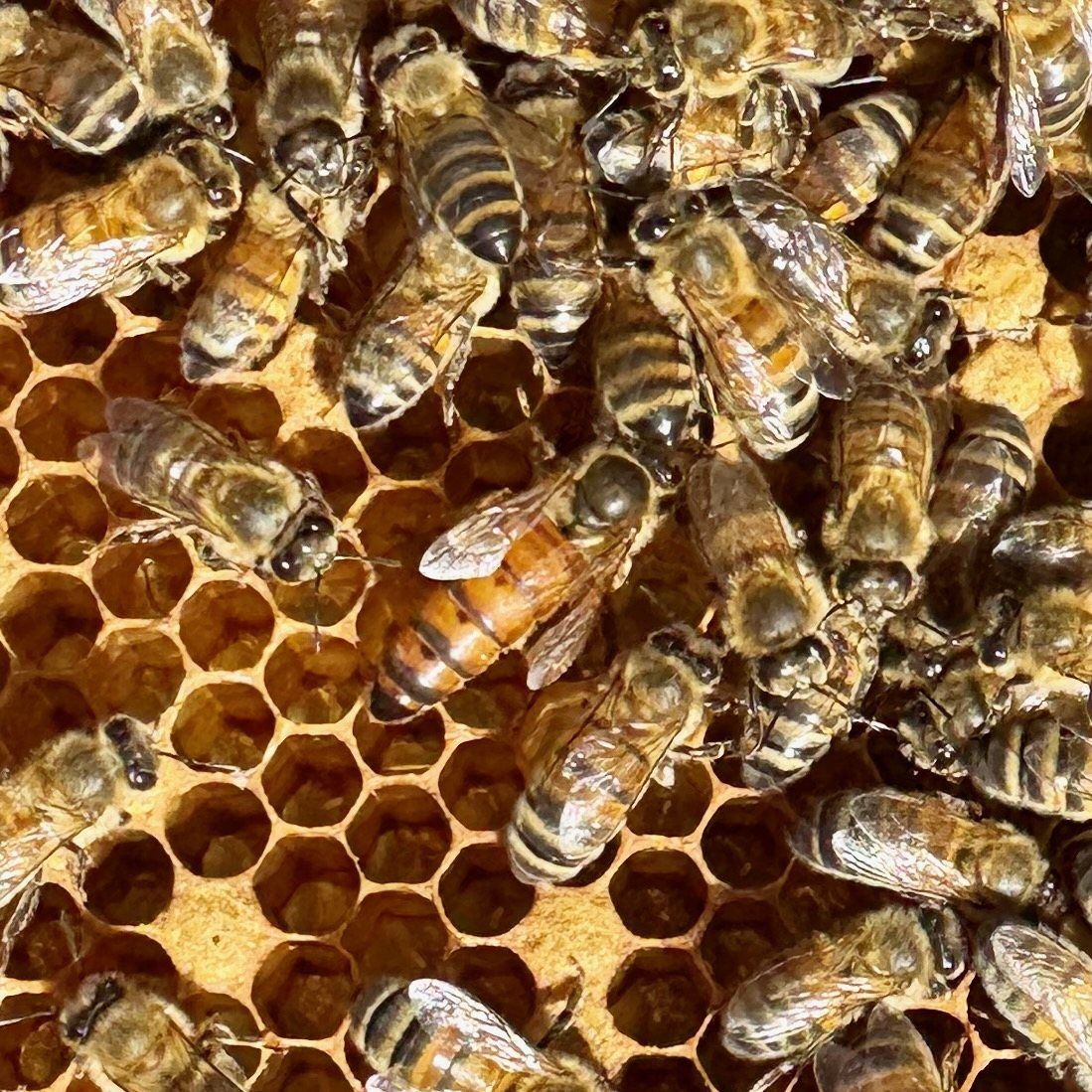
Honey bee breeds are the geographic subspecies of the western honey bee, Apis mellifera, plus a few lines bred by people, such as the Buckfast. In the UK, beekeepers mostly choose between the native dark bee (Apis mellifera mellifera), the Buckfast, the Carniolan and the Italian, and most colonies are in fact a mixture of these. For most hobby beekeepers, the best choice is a calm, locally bred strain from a beekeeper near you, because it is adapted to British weather and its daughters will mate with local drones whatever you buy.
This guide explains what the word “breed” really means for bees, what genetics says about the native bee, where the Buckfast came from, how the imported bees behave in a British summer, and what the law allows when you buy or import queens.
How many honey bee breeds are there?
One species, around 27 subspecies
Every honey bee in a British hive belongs to a single species, Apis mellifera, the western honey bee. Within that species, biologists recognise about 27 subspecies, each shaped by the climate and flora of its home range across Africa, Europe and western Asia. Beekeepers call these subspecies races or breeds. A 2021 study led by Kathleen Dogantzis at York University, published in Science Advances, sequenced 251 genomes from 18 subspecies and concluded that the species most likely originated in western Asia, then spread “thrice out of Asia” into Africa and Europe.
Four big branches
Older genetic work grouped the subspecies into evolutionary lineages, and the 2014 genome survey by Wallberg and colleagues in Nature Genetics, based on 140 genomes from 14 populations, found that the nine native subspecies it sampled clustered into the four major groups already described:
- M lineage: western and northern Europe, including the dark bee A. m. mellifera native to Britain and Ireland, and A. m. iberiensis in Spain and Portugal.
- C lineage: eastern and southern Europe, including the Carniolan (A. m. carnica) and the Italian (A. m. ligustica).
- A lineage: Africa.
- O lineage: the Middle East and western Asia, including the Caucasian bee (A. m. caucasica).
The York study identified two further distinct lineages, one in Egypt and one in Madagascar. For a British beekeeper, the useful point is that the native dark bee belongs to a different branch from the Carniolan and Italian bees that are commonly imported. That distance is why crosses between them behave unpredictably.
Breed, strain, line: three words to keep apart
- A subspecies (race, breed) is a natural geographic population, such as A. m. mellifera.
- A strain or ecotype is a local population within a subspecies, adapted to a particular area, for example a dark bee strain from the Scottish Highlands.
- A line is a population maintained by a breeder through selection and controlled mating. The Buckfast is a line, not a subspecies.
Most of what is sold in the UK as “Carniolan” or “Buckfast” is a line or a cross. Most colonies in a British apiary have a mixed ancestry. Our page on honey bee genetics explains how queens and drones pass on these traits.
Is the dark bee native to Britain?
The British black bee, Apis mellifera mellifera
The dark European honey bee, often called the British black bee or native bee, is the subspecies that colonised north-west Europe after the last glaciation. Philip Denwood, in a 2012 lecture published by BIBBA, argues that it has been in mainland Britain for at least 9,000 years, having crossed the land bridge from the continent. He also notes that Natural England has held that honey bees were introduced about 1,500 years ago and are therefore not native. BIBBA and many British beekeepers treat A. m. mellifera as the native bee of these islands.
Its traditional traits, described by its breeders and in older beekeeping literature, include:
- a dark body, with broad bands of hair and a stocky build;
- frugal use of stores and a small, tight winter cluster;
- willingness to forage in cool, dull and windy weather;
- a slower spring build up, timed to the local flow rather than to the calendar;
- a tendency to stop brood rearing during a dearth, such as the June gap.
These are traits of the subspecies in its pure form. Hybrid colonies may show any mixture of them.
Did Isle of Wight disease wipe it out?
For much of the twentieth century, beekeepers were told that the native bee had been killed off by “Isle of Wight disease”, which caused heavy colony losses from about 1906 to 1918 and was blamed on the acarine (tracheal) mite. Restocking followed, partly with government support, mainly with bees from the Netherlands and France.
This account was challenged by Leslie Bailey of Rothamsted, who reassessed the evidence in a 1964 Bee World paper, “The ‘Isle of Wight Disease’: the origin and significance of the myth”. Denwood’s lecture, quoting the bee scientist Norman Carreck, notes that the acarine explanation is now considered scientifically unsound, even though many beekeeping books still repeat it. Beekeepers such as L. E. Snelgrove reported finding pure British bees in country districts in the 1940s. The native bee was diluted by imports, not exterminated.
What DNA studies show
Genetics now gives a clearer answer than the old debate:
- Ellis and colleagues, 2018, in the Journal of Insect Conservation, tested UK colonies thought to be dark bees. Most were admixed, sitting genetically between A. m. mellifera and A. m. carnica, but mitochondrial and nuclear DNA showed that some hives were relatively pure, between 4 and 15 depending on the threshold used, and genetic diversity was relatively high.
- Buswell and colleagues, 2024, in the Journal of Apicultural Research, used whole genome sequencing on 70 colonies from Britain and Ireland, collected from beekeepers using non-imported stock. Seventeen showed no significant introgression from other subspecies. Colonsay and parts of the South West of England held colonies the authors describe as pure, and Ireland has a large reservoir of A. m. mellifera. Jersey, mainland Scotland and the Isle of Man were flagged as further areas of interest.
So the British black bee survives, mostly in pockets where beekeepers have avoided imports for generations and where hills, water or distance limit drone traffic.
The Buckfast bee: Brother Adam’s hybrid
A bee born of an epidemic
The Buckfast bee comes from Buckfast Abbey in Devon. Karl Kehrle arrived at the abbey from Germany as a boy and began helping Brother Columban with the bees at the age of twelve. According to the abbey, Isle of Wight disease killed 29 of its 45 colonies. A chronology of his life hosted by the University of Namur gives slightly different figures for 1916: 16 colonies out of 46 survived, all of them headed by Carniolan or Italian stock, and every native colony had died. That convinced the young monk, born Karl Kehrle in 1898 and by then Brother Adam, that crossing could produce a more resilient bee. His first cross, in 1917, mated Italian (ligustica) queens with drones of the old British bee.
He took charge of the abbey’s apiaries in 1919 when Brother Columban retired. In 1925 he set up an isolated mating apiary on Dartmoor, where the moor’s lack of other colonies gave him control of the drones. From 1950 he travelled through Europe, North Africa and the Middle East, more than 100,000 miles by the abbey’s count, to collect stocks that he then tested and crossed at Buckfast. He was appointed OBE (in 1973 according to the Namur chronology, 1974 according to the abbey), left the bee department at 93 and died on 1 September 1996, aged 98. Today the abbey keeps about 40 hives, used mainly for education.
What a Buckfast really is
A Buckfast is a line, built by combining several subspecies and fixing the result through selection and controlled mating. It is sold for its gentle temper, low swarming tendency, good honey yield and steady comb building. In the UK it is popular with bee farmers, and breeders in several European countries maintain their own Buckfast lines, so “Buckfast” covers a family of related stocks rather than one fixed bee.
The second generation problem
A Buckfast queen bought from a breeder was mated in controlled conditions. Her daughters, raised in your apiary, will mate with whatever drones fly locally. Their colonies are crosses, and from the second generation on the traits split apart. Some colonies stay calm and productive, others become swarmy or defensive. Keeping a true Buckfast means buying breeder queens or inseminated queens regularly, or belonging to a group that controls mating.
Carniolan, Italian and other imported bees in the UK
The Carniolan, Apis mellifera carnica
The Carniolan comes from the eastern Alps and the northern Balkans, around Slovenia and Austria. It is grey-brown and is valued for:
- a calm temper and quiet behaviour on the comb;
- a small winter cluster and thrifty use of stores;
- a very fast spring build up as soon as pollen comes in, which suits oil seed rape;
- a marked tendency to swarm if space and swarm control are not kept ahead of it.
That fast build up is useful in an early spring but can catch out a beginner in May. Our guide to swarming sets out the control methods.
The Italian, Apis mellifera ligustica
The Italian bee, from the Italian peninsula, is the classic yellow bee. It is prolific, gentle and builds large colonies, which is why it dominates beekeeping in North America and Australia. In Britain, its weaknesses show: it keeps rearing brood in poor weather and through the June gap, so it consumes stores quickly, and large colonies may need feeding in a wet summer. It is also prone to drifting and robbing.
The Caucasian and others
The Caucasian bee, A. m. caucasica, from the mountains between the Black Sea and the Caspian, is known for a long tongue, a gentle temper and heavy use of propolis. It is rarely kept pure in the UK. You may also see “Carniolan cross”, “dark Carniolan” or “local mongrel” in sale lists. These names describe a beekeeper’s line, not a defined subspecies, so judge them by the colony, not the label.
Honey bee breeds compared
The table summarises typical traits as described by breeders and beekeeping literature. Within every breed, individual strains vary widely.
| Trait | Native dark bee | Buckfast | Carniolan | Italian |
|---|---|---|---|---|
| Lineage | M | hybrid line | C | C |
| Colour | dark brown to black | brown to golden | grey-brown | yellow |
| Temper | variable, calm in selected strains | usually calm | usually calm | usually calm |
| Spring build up | slow, follows the flow | steady | very fast | fast |
| Swarming | moderate | low | high | moderate |
| Winter consumption | low | moderate | low | high |
| Foraging in cool weather | good | good | good | moderate |
| June gap behaviour | cuts brood | moderate | cuts brood | keeps rearing |
| Stays true when open mated | yes, in native areas | no | no | no |
The last row matters most. Unless you live somewhere with controlled mating, the bees in your apiary three or four years from now will be largely what flies in your area.
Which honey bee is best for beginners in the UK?
The case for local bees
The best evidence on this question comes from the European GEI experiment run by the COLOSS network from 2009 to 2012. Researchers set up 621 colonies of 16 genetic origins from five subspecies in 21 apiaries across 11 countries, and left them without varroa treatment after an initial oxalic acid dose. According to the summary by Fani Hatjina published by the Eva Crane Trust, colonies of local origin survived on average 553 days, against 470 days for non-local colonies, about 83 days longer. No strain was best everywhere: each did best where it came from. COLOSS concludes that it is worth continuing to conserve locally adapted honey bee populations.
The trial does not tell you which bee will do best in your own apiary. It does show that adaptation to local conditions is a measurable advantage, and the logic applies to British weather, with its wet summers, June gap and late heather.
A practical way to choose
- Start with temper, not a name. A calm, steady colony that stays on the comb is worth more to a beginner than a fashionable breed.
- Buy locally. Ask your local association, usually affiliated to the BBKA, or the Scottish, Welsh or Ulster beekeepers’ associations, who sells nucs from calm, low swarming local colonies. Visit and see the bees opened if you can.
- Look at what flies around you. If the area is full of Buckfast or Carniolan colonies, your daughter queens will be crosses. If you are near an improvement group working with dark bees, local stock makes even more sense.
- Keep records. Note temper, calmness on the comb, swarming, spring build up, winter stores and honey yield for every colony. These records turn a mixed apiary into the basis of selection.
- Requeen bad tempered colonies. Do not breed from them.
Our guide on how to start beekeeping covers buying your first nuc.
Regional differences across the UK
The same bee does not suit every part of the country:
- Lowland England: early springs, oil seed rape in April and May, and often a June gap. A fast spring build up pays off on rape, but colonies that keep rearing brood in the gap need feeding or careful watching.
- The north, Wales and upland areas: shorter seasons, more wind and rain, and later springs. Thrifty bees that forage in cool weather and winter on modest stores, traits associated with the dark bee and well adapted local strains, tend to do better here.
- Scotland: long winters and, in many areas, heather in August as the main crop. A colony needs a strong population of foragers late in the summer, which favours bees that keep building into July rather than peaking in May.
- Northern Ireland: follows EU animal health rules for bee movements, and only queens can be sent from Great Britain, so locally bred bees are usually the simplest choice.
How to assess a colony before you buy
When you see a nuc or a colony opened, look for: bees that stay calm on the comb and do not run or boil over the top bars; few bees following you after the hive is closed; a compact, solid brood pattern; and a queen that is marked and of known age. Ask the seller how the colonies swarmed, wintered and yielded last year, and how mites were monitored and treated. A seller who keeps records is a good sign.
What it costs
As listed by UK producers in October 2026, an open mated, UK bred queen costs around £50 to £60 plus postage: £50 for a British bred Buckfast queen from Bishops Bees, and £59 for a UK bred queen from Cornish Honey. Instrumentally inseminated breeder queens cost much more. If you have several colonies, rearing your own from your best stock is cheaper and keeps the genetics local. Our guide to queen rearing explains how.
Why do crosses between breeds turn aggressive?
The mechanism
A honey bee queen mates with many drones, often more than ten, on a few flights in her first days of adult life, and the drones can come from colonies kilometres away. The workers she lays are full or half sisters with a mix of paternal genes. You choose the queen, but the neighbourhood chooses the fathers.
First generation and after
A first cross between two distinct subspecies, such as a Carniolan queen mated to dark drones, often shows hybrid vigour: large colonies, good yields, and frequently a calm temper. The trouble comes in later generations. When the daughters of that cross mate locally, the genes that held the combination together are shuffled. Some colonies inherit traits that work badly together, and defensiveness is the trait beekeepers notice first. BIBBA states that the bad temper often seen in these crosses is more likely to come from imported bees than from local ones, which is one reason its groups commit not to import.
What it means for you
If a colony becomes followers, stingers and runners on the comb, the fix is the same whatever its ancestry: requeen it from a calm line, ideally local, and stop raising drones from it.
How is the native honey bee being conserved?
BIBBA and bee improvement groups
The Bee Improvement and Bee Breeders Association was founded on 27 July 1963 as the Village Bee Breeders Association by Beowulf Cooper, an entomologist at the Ministry of Agriculture, Fisheries and Food, and a small group of beekeepers. It became the British Isles Bee Breeders Association, took its present name in 1997, and is now a charitable incorporated organisation. Its aims are the conservation, study, selection and improvement of the native honey bee and of near-native and locally adapted bees.
Its main tool is the bee improvement group: beekeepers in one area who select from their own colonies, flood the area with drones from their best stock and agree not to import. BIBBA’s guide reckons a group needs at least 10 to 20 full colonies to start.
Colonsay and Oronsay: the UK’s only legal reserve
On the Scottish islands of Colonsay and Oronsay, the choice of bee is set by law. The Bee Keeping (Colonsay and Oronsay) Order 2013, made under section 14ZC of the Wildlife and Countryside Act 1981 and in force since 1 January 2014, prohibits keeping any bee of the genus Apis other than Apis mellifera mellifera on the two islands. Keeping any other honey bee there may be an offence under that section. The islands’ isolation makes them a natural mating station, and the 2024 genome study confirmed that their bees are among the purest dark bees in Britain and Ireland.
Nowhere else in the UK restricts which honey bee you may keep. In England, Wales and Northern Ireland, conservation of the native bee relies on beekeepers and groups working voluntarily.
Ireland and the Isle of Man
The 2024 study also confirmed that Ireland holds a large population of dark bees, and conservation groups work with these bees on both sides of the border. The Isle of Man, a Crown dependency outside the UK, is recognised as free of varroa, so the Scottish Government’s guidance notes that bees may not be exported from Scotland to the island. These isolated populations are a resource for the whole of the British Isles.
Importing queens into the UK: what the rules say
The current rules for Great Britain
According to the National Bee Unit and the Scottish Government’s import guidance:
- From the EU: only queens, each in a single cage with no more than 20 attendant workers. Packages, nucs and colonies are banned.
- From outside the EU: queens with attendants, only from approved countries, entering through a border control post, whose check is charged to the importer. Packages, nucs and colonies are banned from every third country except New Zealand.
- New Zealand: queens and package bees may be imported under a bilateral veterinary agreement.
- Paperwork: notify the import through IPAFFS before it leaves and upload a copy of the health certificate. The certificate, issued by the exporting country’s authority, must carry your IPAFFS reference number, be issued no more than 24 hours before despatch and is valid for 10 days.
- On arrival: move the queen to a new cage and post the original cage, attendants and packaging within five days to the NBU at Fera Science Ltd, York Biotech Campus, Sand Hutton, York YO41 1LZ (England and Wales) or to SASA in Edinburgh (Scotland). The attendants need not be dead, because the parcel is frozen on receipt, but it must be packed so that no bee can escape. The check is free.
Northern Ireland
Northern Ireland applies EU animal health rules. Only queens may be moved from Great Britain to Northern Ireland, and this counts as an export, needing an Official Veterinarian inspection, an Export Health Certificate and notification on TRACES NT, following DAERA guidance. In the other direction, the Scottish Government states that Northern Ireland beekeepers may still send packages and colonies to Great Britain.
Why the checks matter
The attendants and cages are examined because imported bees can carry pests that Britain does not yet have, above all the small hive beetle, Aethina tumida, established in Calabria, and Tropilaelaps mites. Both are notifiable under the Bee Diseases and Pests Control Orders. A single infested consignment could do more damage than any gain in honey yield. If you do import, register on BeeBase so inspectors can trace the queen, and see our page on how to register your bees.
Is there a varroa resistant honey bee breed?
Not yet, in the sense of a bee you can buy and leave untreated. No breed sold in the UK is reliably resistant. What exists is selection for traits that slow mite growth:
- Hygienic behaviour: workers detect, uncap and remove dead or diseased brood. The National Bee Unit described the freeze-killed brood test in Bee Craft in 2002: a piece of brood comb is frozen for 24 hours and returned to the colony, and a colony counts as hygienic if the bees remove more than 95% of the dead brood within 48 hours. The trait is often cited as a defence against chalkbrood and American foulbrood.
- Varroa sensitive hygiene (VSH): workers remove pupae in cells where mites are reproducing.
- Grooming and mite biting: workers remove and damage mites on adult bees.
BIBBA funds research on hygienic and grooming behaviour, and several British improvement groups score these traits in their records. Any breeder claiming a “varroa resistant” queen should be able to tell you how the trait was measured. Until you have colonies proven over several years, monitor mites and use a VMD authorised treatment when the count calls for it. Our guide to varroa mites covers thresholds and products, and our page on bee strains gathers the other articles on breeds and breeding.
Frequently asked questions
Is the British black bee extinct?
No. The idea that Isle of Wight disease wiped out the native bee between 1906 and 1918 has been challenged since Leslie Bailey of Rothamsted reassessed the epidemic in Bee World in 1964. A 2024 whole genome study of 70 colonies found 17 with no significant introgression from other subspecies, with pure dark bees on Colonsay and in parts of South West England, and a large reservoir in Ireland.
What is the best honey bee for a beginner in the UK?
A calm, local strain from a beekeeper near you, rather than a named breed. Local bees are already adapted to British weather and your queens will mate with local drones anyway. Ask your local beekeeping association who breeds for temper and low swarming, and look at the colonies before you buy. Temper and swarminess vary more between strains than between breeds.
Are Buckfast bees a breed?
Not in the biological sense. The Buckfast is a hybrid line created at Buckfast Abbey in Devon by Brother Adam, who took charge of the abbey's bees in 1919 and crossed stocks collected across Europe and the Middle East at an isolated mating apiary on Dartmoor. It is kept true by controlled mating. Open mated over several generations, it drifts back towards the local bee.
Why are my bees getting more aggressive?
Often because of crossing. A first cross between two different bees can be calm and vigorous, but when its daughter queens mate with whatever drones fly locally, the next generation reshuffles the genes and some colonies turn defensive. BIBBA warns that bad temper in these crosses is more likely to come from imported stock than from local bees. Requeening from a calm local line usually fixes it.
Can I import queen bees into the UK?
Yes, but only queens with up to 20 attendants can come into Great Britain from the EU. Packages, nucs and colonies cannot. Every import must be notified on IPAFFS with an official health certificate, and within five days you must post the old cage and attendants to the NBU at Fera's York Biotech Campus in Sand Hutton or, in Scotland, to SASA in Edinburgh. New Zealand may also send packages.
Where in the UK is it illegal to keep non-native bees?
On the Scottish islands of Colonsay and Oronsay. The Bee Keeping (Colonsay and Oronsay) Order 2013, in force since 1 January 2014, makes it an offence to keep any honey bee other than Apis mellifera mellifera there. It is the only place in the UK with such a rule. Elsewhere you may keep any honey bee, provided imported stock meets the health rules.
How much does a queen bee cost in the UK?
UK bred, open mated queens were listed at around £50 to £60 in October 2026, plus postage, for example £50 for a British bred Buckfast queen and £59 for a UK bred queen from a Cornish producer. Virgin queens are cheaper but may fail to mate. Instrumentally inseminated breeder queens from selection programmes cost considerably more.
Is there a honey bee that is resistant to varroa?
No breed available in the UK lets you skip mite monitoring. Some lines are selected for hygienic behaviour, the ability to find and remove dead or infested brood, and BIBBA funds research on hygienic and grooming behaviour. These traits reduce mite growth in some colonies, but you still need to count mites and treat with a VMD authorised product when levels are high.
Sources
- A worldwide survey of genome sequence variation provides insight into the evolutionary history of the honeybee Apis mellifera (Nature Genetics, 2014), Wallberg et al., University of Pretoria repository
- Where did western honey bees come from? New research finds the sweet spot (Dogantzis et al., Science Advances, 2021), York University
- The Dark Bee Apis mellifera mellifera in the United Kingdom (lecture to the SICAMM conference, 2012), Philip Denwood, BIBBA
- Introgression in native populations of Apis mellifera mellifera L: implications for conservation (Journal of Insect Conservation, 2018), Ellis et al., University of Plymouth (PEARL)
- Whole genome analyses of introgression in British and Irish Apis mellifera mellifera (Journal of Apicultural Research, 2024), Buswell et al., James Hutton Institute
- The 'Isle of Wight Disease': the origin and significance of the myth (Bee World 45, 1964), Leslie Bailey, Rothamsted Research repository
- Our bees: history of the Buckfast Abbey bee department, Buckfast Abbey
- Brother Adam: chronological biography, Jean-Marie Van Dyck, Université de Namur
- BIBBA history and development, Bee Improvement and Bee Breeders Association
- BIBBA guide to forming and running bee improvement groups, Bee Improvement and Bee Breeders Association
- The Bee Keeping (Colonsay and Oronsay) Order 2013 (SSI 2013/279), legislation.gov.uk
- Importance of adaptation of bee populations on their local environment, Fani Hatjina, Hellenic Agricultural Organization DEMETER, via the Eva Crane Trust
- GEI experiment: pan-European genotype-environment interactions, COLOSS
- Imports and exports, National Bee Unit, BeeBase
- Importing bees into Scotland: guidance, Scottish Government
- Hygienic behaviour (Bee Craft, April 2002), National Bee Unit
- British bred Buckfast queen, open mated (price checked October 2026), Bishops Bees
- Queen bee, UK bred (price checked October 2026), Cornish Honey